
Chromosome numbers and karyogramsSpec A3.1.6, A3.1.7
In short
Chromosome numbers vary between plant and animal species: humans have 46 and chimpanzees have 48. Diploid cells have an even number because chromosomes are in homologous pairs. A karyogram shows a cell's chromosomes arranged in pairs by length, centromere position and banding pattern, and supports the hypothesis that human chromosome 2 formed by fusion.
Plant and animal species show great diversity in chromosome number. Humans have 46 chromosomes and chimpanzees have 48. Diploid cells normally have an even number, because their chromosomes are in homologous pairs, one from each parent.
- Karyotype
- The number and type of chromosomes present in the nucleus of a cell of an organism.
- Karyogram
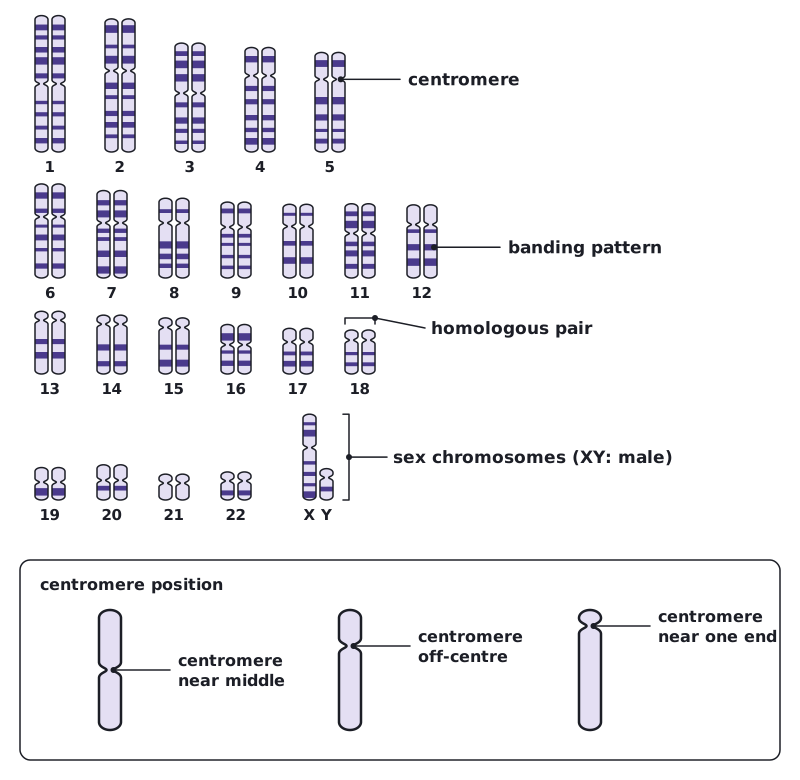
- An image of the chromosomes of a cell arranged in homologous pairs, in order of decreasing length.
- Centromere
- The region where the two sister chromatids are held together; its position along the chromosome is used to identify chromosomes.
Making a karyogram
- Take cells that are dividing and stop them in metaphase of mitosis, when chromosomes are most condensed.
- Spread the chromosomes on a slide and stain them, which gives each chromosome a pattern of light and dark bands.
- Photograph the chromosomes under a microscope.
- Pair up homologous chromosomes and arrange the pairs by length, longest first, with the sex chromosomes last.
Chromosomes are classified by three features: length, centromere position (near the middle, off-centre or near one end) and banding pattern. A karyogram shows the sex of the individual (XX or XY) and any unusual chromosome number, such as three copies of chromosome 21.
 (opens full size in a new tab)
The chromosome 2 fusion hypothesis
Humans and chimpanzees share a common primate ancestor. The hypothesis is that human chromosome 2 arose from the end-to-end fusion of two chromosomes inherited from that shared ancestor. These two chromosomes are still separate in chimpanzees: the IB guide calls them chromosomes 12 and 13, from an older numbering, and today they are usually called chromosomes 2A and 2B. The fusion happened in the human lineage after it split from the chimpanzee lineage, and it reduced the diploid number from 48 to 46. The evidence:
- The banding pattern of human chromosome 2 matches that of chimpanzee chromosomes 12 and 13 (2A and 2B) placed end to end.
- Telomere sequences, normally found only at chromosome ends, occur near the middle of human chromosome 2, at the proposed fusion point.
- Human chromosome 2 has remains of a second, inactive centromere, in the position expected for the centromere of the second ancestral chromosome.
- Genes on human chromosome 2 are largely in the same order as on the two chimpanzee chromosomes.
The evidence strongly supports the hypothesis but the fusion itself was never observed. The match is not perfect in every detail, because each lineage has had some smaller chromosome changes, such as inversions, since the split.
When classifying chromosomes in a karyogram, compare length first, then centromere position, then banding pattern. When evaluating the fusion hypothesis, say what each piece of evidence predicts and whether it is observed.
Nature of science: the origin of chromosome 2 is a testable hypothesis, because it makes predictions (telomere sequences mid-chromosome, a second centromere) that could have been shown false. A statement that makes no testable prediction is not scientific.
Written and checked against the IB Biology HL specification · Updated October 2026