
Dentition and diet in the HominidaeSpec B4.2.8
In short
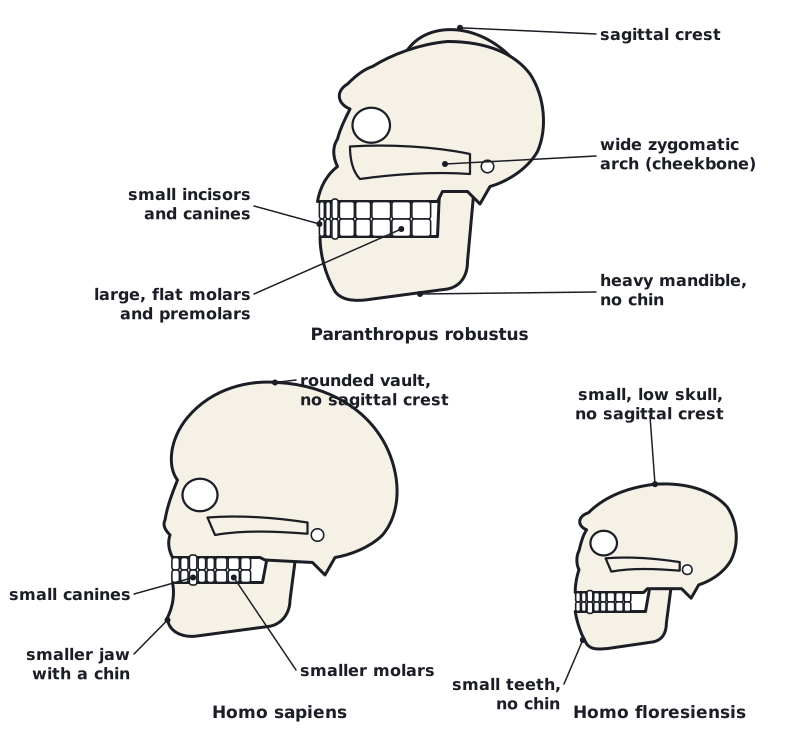
Dentition shows diet in the Hominidae. Omnivorous Homo sapiens has small incisors and canines and moderate molars. Homo floresiensis had small canines and molars and is also inferred to be omnivorous. Herbivorous Paranthropus robustus had very large molars and premolars with thick enamel and a sagittal crest for large jaw muscles, suited to grinding tough plant food.
The family Hominidae includes humans and their extinct relatives. Comparing teeth and skulls lets biologists infer what each species ate.
| Species | Dentition and skull features | Inferred diet |
|---|---|---|
| Homo sapiens (humans) | Small incisors and canines; moderate premolars and molars; smaller jaw and no sagittal crest | Omnivorous: meat and plants, much of it cooked or processed |
| Homo floresiensis | Small skull; small but robust jaw with no chin; small canines; small molars with features like those of later Homo, including modern humans; no sagittal crest | Omnivorous: small, unspecialised teeth suit a mixed diet, and stone tools and cut-marked bones of Stegodon (a dwarf elephant relative) in the same cave show that meat was eaten, probably often scavenged |
| Paranthropus robustus | Very large, flat molars and premolars with thick enamel; small incisors and canines; heavy jaw, wide cheekbones and a sagittal crest for large chewing muscles | Herbivorous: tough, hard plant material such as seeds, roots and tubers, ground by the large molars |
Large grinding surfaces and powerful chewing muscles point to a diet that needed a lot of grinding. Smaller molars, no sagittal crest and, in fossils, evidence such as stone tools and cut-marked animal bones point to a mixed diet including meat.
 (opens full size in a new tab)
Examine models or digital collections of skulls. Note the size of each type of tooth, the thickness of enamel, jaw size and any sagittal crest, then infer the diet from these anatomical features.
Nature of science: observing living mammals led to theories relating dentition to herbivorous or carnivorous diets. These theories allow the diet of extinct species to be deduced.
Written and checked against the IB Biology HL specification · Updated October 2026