
MutualismSpec C4.1.12
In short
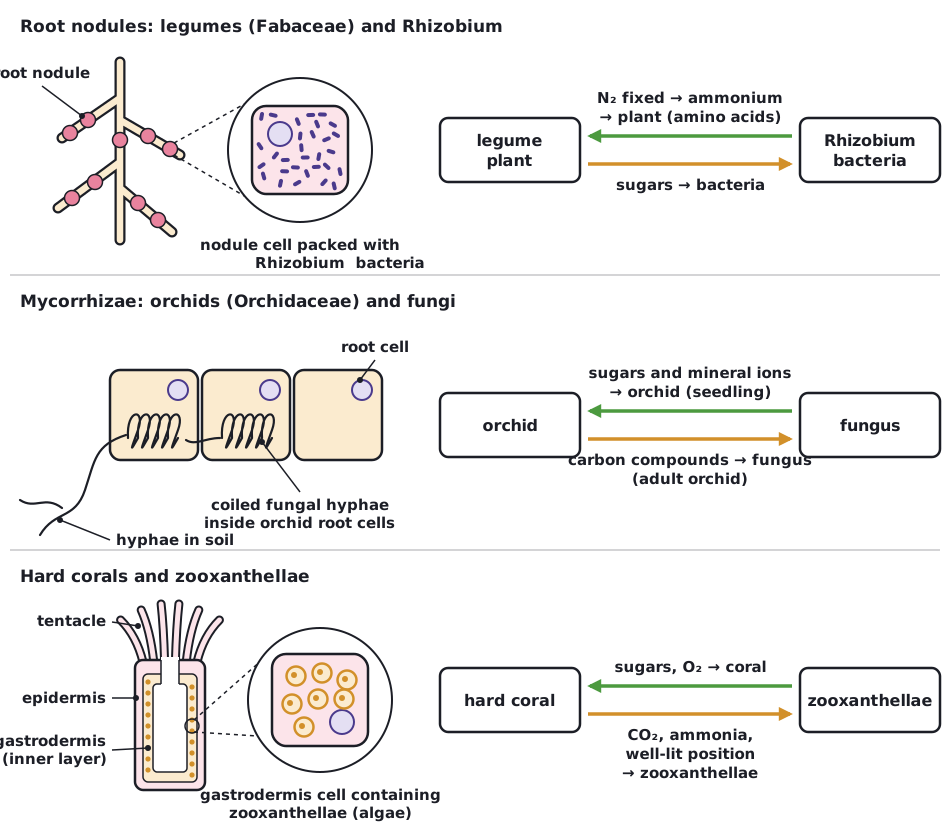
Mutualism is an interspecific relationship that benefits both species. In root nodules of legumes (Fabaceae), Rhizobium bacteria fix nitrogen for the plant and receive sugars. Orchid mycorrhizal fungi supply sugars and minerals to the orchid and receive carbon compounds once it photosynthesises. Zooxanthellae in hard corals supply photosynthetic products; the coral provides carbon dioxide, nutrients and a sheltered, sunlit position.
In mutualism both species gain. Each partner provides something the other cannot easily obtain alone.
| Example | Benefit to the first partner | Benefit to the second partner |
|---|---|---|
| Root nodules in Fabaceae (legumes such as peas, beans, clover) | Plant: Rhizobium bacteria fix nitrogen gas (N₂) into ammonium, which the plant uses to make amino acids, so it grows in nitrogen-poor soil | Rhizobium: receives sugars and other carbon compounds from the plant's photosynthesis, and a protected, low-oxygen site inside the nodule |
| Mycorrhizae in Orchidaceae (orchids) | Orchid: fungal hyphae inside root cells supply sugars and mineral ions; orchid seeds are tiny with almost no food store, so seedlings depend on the fungus to germinate and grow | Fungus: receives carbon compounds such as sugars from the orchid once it has green leaves and photosynthesises (shown by isotope tracing in creeping lady's-tresses, Goodyera repens); a seedling gives nothing back, so the relationship becomes mutualistic only in the adult |
| Zooxanthellae in hard corals | Coral: the photosynthetic algae inside its cells pass sugars, other organic compounds and oxygen to the coral, supplying most of its energy | Zooxanthellae: receive carbon dioxide and nitrogen compounds (ammonia) from the coral's metabolism, and a protected, well-lit position near the surface |
Zooxanthellae are dinoflagellates. If seawater gets too warm, corals expel them and bleach; without their partner they starve unless the algae return.
 (opens full size in a new tab)
For every example, give a benefit to each partner. Answers that give a benefit to only one partner lose marks. Common or scientific names are both accepted.
Written and checked against the IB Biology HL specification · Updated October 2026