
Electron transport chain, chemiosmosis and oxygenSpec C1.2.13, C1.2.14, C1.2.15, C1.2.16
In short
Reduced NAD from glycolysis, the link reaction and the Krebs cycle passes a pair of electrons to the first carrier of the electron transport chain on the inner mitochondrial membrane. Electron flow releases energy that pumps protons into the intermembrane space. Protons diffuse back through ATP synthase, which phosphorylates ADP: chemiosmosis. Oxygen is the terminal electron acceptor, forming water.
Reduced NAD delivers energy to the chain
Reduced NAD comes from glycolysis, the link reaction and the Krebs cycle. Energy is transferred when reduced NAD passes a pair of electrons to the first carrier in the electron transport chain, a series of carriers embedded in the inner mitochondrial membrane (on the cristae). This converts reduced NAD back to NAD, which can return to accept more hydrogen.
A proton gradient
The electrons pass from carrier to carrier. At each step they lose energy, and some carriers use this energy to pump protons (H⁺) from the matrix across the inner membrane into the intermembrane space. Because the inner membrane is impermeable to protons, a proton gradient builds up: a higher concentration of protons in the intermembrane space than in the matrix.
Chemiosmosis and ATP synthase
Chemiosmosis is the movement of protons down their concentration gradient through ATP synthase. Protons can only diffuse back into the matrix through channels in ATP synthase. As they flow through, part of the enzyme rotates, and ATP synthase couples the release of energy from the proton gradient with the phosphorylation of ADP, forming ATP. Most of the ATP from aerobic respiration is made this way.
Oxygen as terminal electron acceptor
At the end of the chain, oxygen accepts electrons from the last carrier and protons from the matrix, producing metabolic water.
Removing electrons at the end allows continued flow of electrons along the chain. Without oxygen the carriers stay reduced, reduced NAD cannot be oxidised, the proton gradient is not maintained and no NAD is available for the link reaction and Krebs cycle, so aerobic respiration stops.
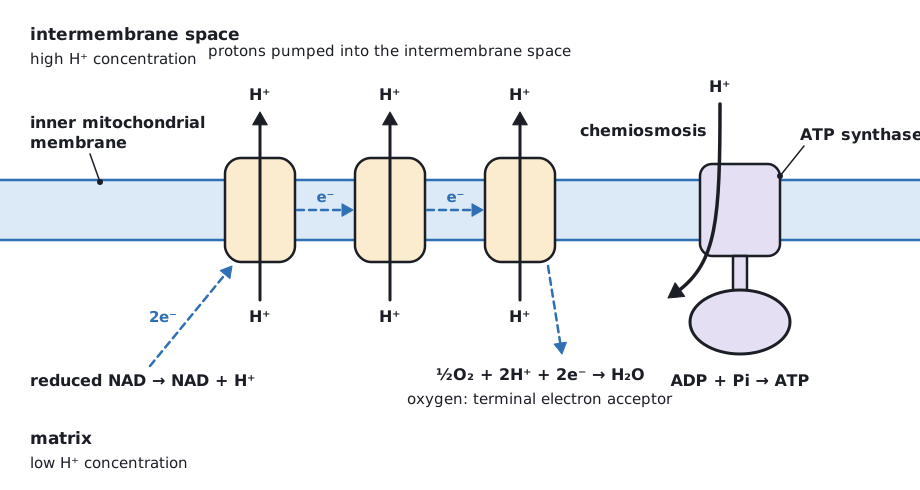 (opens full size in a new tab)
Give the direction precisely: protons are pumped into the intermembrane space and flow back into the matrix through ATP synthase. You do not need the names of the protein complexes.
Written and checked against the IB Biology HL specification · Updated October 2026