
Phenology and disrupted synchronySpec D4.3.9, D4.3.10
In short
Phenology is research into the timing of biological events such as flowering, budburst, bird migration and nesting. Photoperiod and temperature patterns influence this timing. Climate change disrupts synchrony when one population uses temperature as its cue and another uses photoperiod, as with Arctic mouse-ear chickweed and migrating reindeer, or great tits and caterpillars.
Phenology is research into the timing of biological events. Examples include flowering, budburst and bud set in deciduous trees, bird migration and nesting.
Two variables commonly act as cues: photoperiod (day length), which is not affected by climate change, and temperature patterns, which are. Within an ecosystem, temperature may act as the cue in one population and photoperiod in another.
Disruption to synchrony
| Example | Cues | Effect of warming |
|---|---|---|
| Arctic mouse-ear chickweed (Cerastium arcticum) and migrating reindeer (Rangifer tarandus) in Greenland | Plant growth is cued by temperature; reindeer migration to calving grounds is cued by photoperiod | Plants grow earlier in warm springs, so peak food has passed when reindeer arrive and calve. Fewer calves survive. |
| Great tit (Parus major) and caterpillars in north European forests | Caterpillar emergence follows temperature and leaf budburst; great tit laying date changes less | Peak caterpillar biomass comes earlier, so chicks hatch after the peak and fewer survive. |
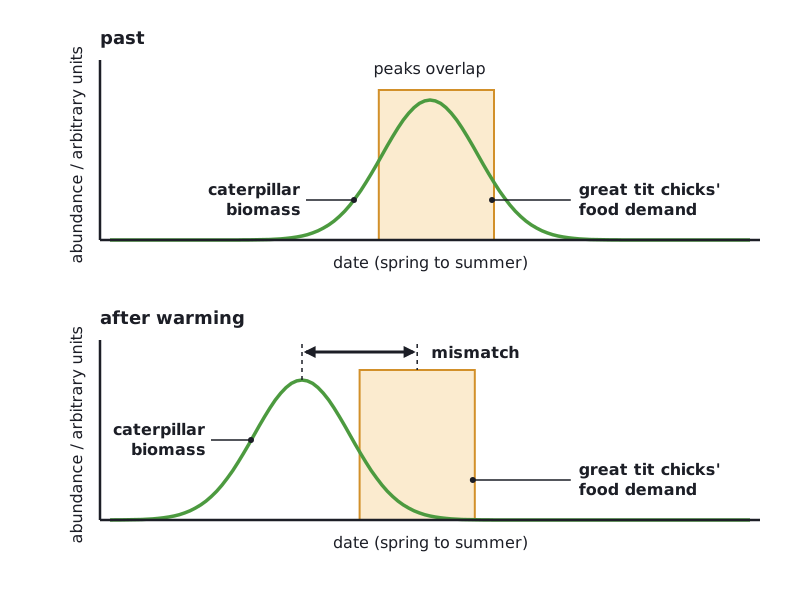 (opens full size in a new tab)
Name the cue for each species. The mismatch only arises because the two populations respond to different cues.
Written and checked against the IB Biology HL specification · Updated October 2026