
Starch, glycogen and celluloseSpec B1.1.5, B1.1.6
In short
Starch in plants and glycogen in animals are energy storage polysaccharides of alpha-glucose. Coiling and branching make them compact, their large size makes them relatively insoluble, and glucose is easily added or removed by condensation and hydrolysis. Cellulose is made of beta-glucose in alternating orientation, giving straight chains bundled and cross-linked by hydrogen bonds into strong fibres.
Energy storage: starch and glycogen
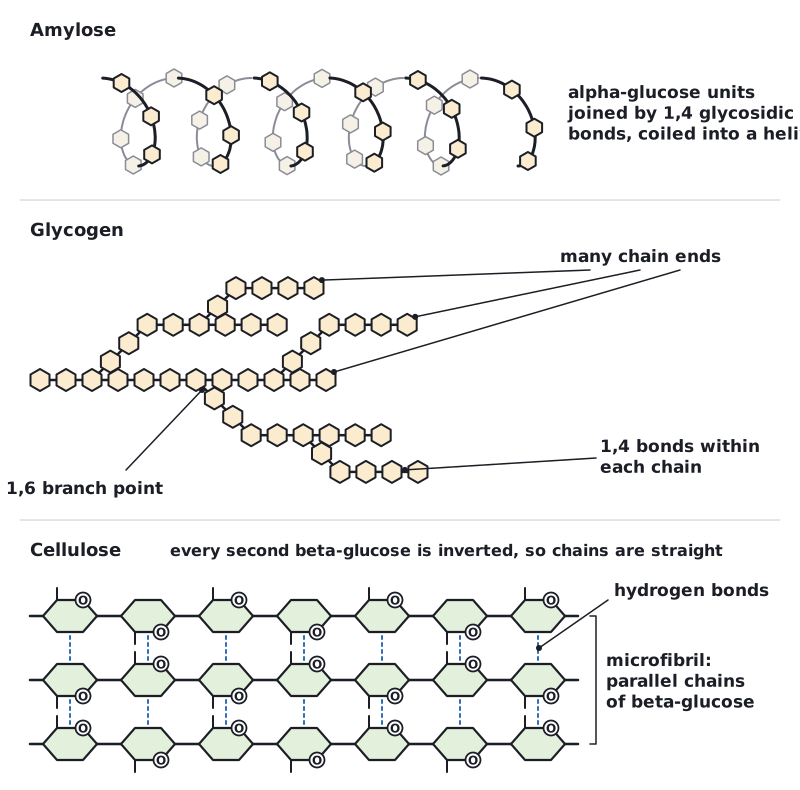
Plants store glucose as starch and animals store it as glycogen, mainly in liver and muscle cells. Both are polymers of alpha-glucose linked by glycosidic bonds.
| Polysaccharide | Organism | Structure |
|---|---|---|
| Amylose (part of starch) | Plants | Unbranched chain of alpha-glucose (1,4 bonds) that coils into a helix |
| Amylopectin (part of starch) | Plants | Chain with branches (1,6 bonds) at intervals |
| Glycogen | Animals and fungi | Like amylopectin but more highly branched |
- Compact: coiling and branching during polymerisation pack many glucose units into a small space.
- Relatively insoluble: the molecules are very large, so they have little osmotic effect and do not leave the cell.
- Easy to build up or mobilise: alpha-glucose is added by condensation or removed by hydrolysis. Branches give many chain ends where enzymes can work at the same time, so glycogen can release glucose rapidly.
Structure: cellulose
Cellulose is a polymer of beta-glucose. Because the –OH on C1 is above the ring, each monomer is linked in the alternating orientation: every second glucose is turned upside down relative to its neighbours. This gives straight, unbranched chains.
Straight chains lie parallel and are cross-linked by hydrogen bonds between their –OH groups. Bundles of chains form microfibrils with very high tensile strength. In plant cell walls these resist the pressure of water inside the cell, so cells become turgid instead of bursting.
 (opens full size in a new tab)
Linking question: how can compounds made by organisms become carbon sinks? Cellulose is hard to hydrolyse, so in waterlogged soils dead plant matter builds up as peat, locking carbon away.
Written and checked against the IB Biology HL specification · Updated October 2026