
Glycoproteins and cell–cell recognitionSpec B1.1.7
In short
Glycoproteins are proteins with carbohydrate chains attached, found on the outer surface of the plasma membrane. The carbohydrate chains act as markers that other cells recognise, which is cell–cell recognition. ABO blood group antigens are an example: the carbohydrate on red blood cells differs between groups A, B, AB and O, so mismatched transfusions trigger an immune response.
A glycoprotein is a protein with one or more carbohydrate chains (short chains of monosaccharides) attached. In the plasma membrane the carbohydrate always faces outwards, into the extracellular fluid.
The sequence and branching of the carbohydrate chain is specific to a type of cell, tissue or individual. Other cells, including cells of the immune system, can bind to it. This is cell–cell recognition: it lets cells recognise self from non-self and helps cells of the same tissue stick together.
Example: ABO antigens
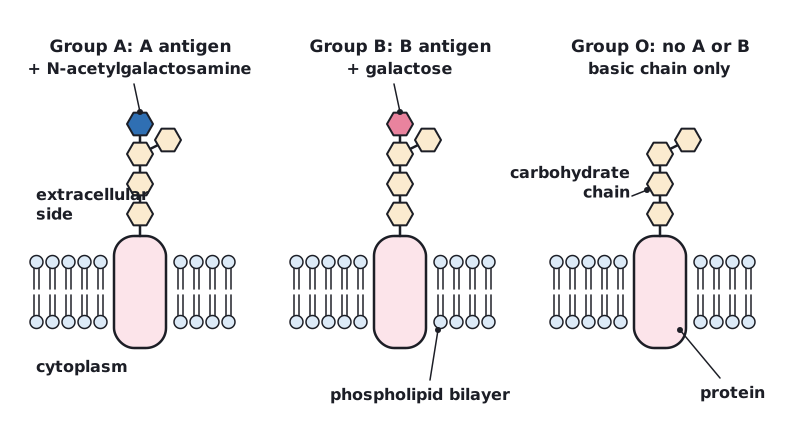
Red blood cells carry carbohydrate chains on their membrane glycoproteins (and glycolipids) that act as antigens. All groups share the same basic chain; groups A and B add one extra sugar to it, a different sugar in each case. The sugar names in the table are for interest only: you need to know that the antigens differ in their carbohydrate chain, not what the sugars are.
| Blood group | Antigen on red blood cells | Carbohydrate chain |
|---|---|---|
| O | Neither A nor B | Basic chain only |
| A | A antigen | Basic chain + N-acetylgalactosamine |
| B | B antigen | Basic chain + galactose |
| AB | A and B antigens | Both forms present |
If a person receives red blood cells with an antigen their own cells do not carry, antibodies in their plasma bind to that antigen. The donated cells clump together (agglutination). This is why blood for transfusion must be matched.
 (opens full size in a new tab)
Written and checked against the IB Biology HL specification · Updated October 2026