
Condensation and hydrolysis reactionsSpec B1.1.2, B1.1.3
In short
A condensation reaction links two monomers by a covalent bond and releases a water molecule, so repeated condensation builds a polymer. Hydrolysis is the reverse: a water molecule is split to provide the –H and –OH groups added to the monomers, breaking the bond. Polysaccharides, polypeptides and nucleic acids are all made and digested this way.
Macromolecules are large molecules built from many small units called monomers. A chain of monomers is a polymer.
Condensation: building polymers
In a condensation reaction, two monomers are linked by a covalent bond. An –OH from one monomer and an –H from the other are removed and combine to form water. Repeating this links monomers into a polymer. Condensation reactions are catalysed by enzymes and need energy, usually supplied by ATP.
| Polymer | Monomer | Bond formed |
|---|---|---|
| Polysaccharide (starch, glycogen, cellulose) | Monosaccharide (e.g. glucose) | Glycosidic bond |
| Polypeptide | Amino acid | Peptide bond |
| Nucleic acid (DNA, RNA) | Nucleotide | Phosphodiester bond |
Hydrolysis: digesting polymers
In hydrolysis, a water molecule is split. Its –H and –OH groups are added to the two monomers on either side of the bond, so the bond breaks and monomers are released. That is where the name comes from: hydro (water) and lysis (splitting).
Digestion of food in the gut is hydrolysis catalysed by enzymes: amylase hydrolyses starch, proteases hydrolyse polypeptides and lipases hydrolyse triglycerides. Hydrolysis also happens inside cells, for example when glycogen is broken down to release glucose.
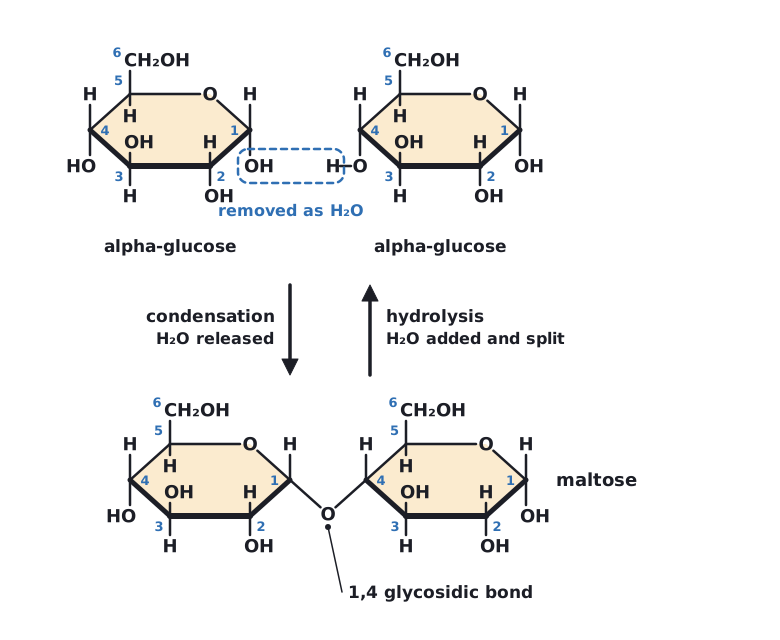 (opens full size in a new tab)
Water is produced by condensation and used up by hydrolysis. Say that hydrolysis splits a water molecule, not just that it adds water.
Written and checked against the IB Biology HL specification · Updated October 2026