
Epigenetic inheritance and the environmentSpec D2.2.7, D2.2.8, D2.2.9, D2.2.10
In short
Epigenetic inheritance is the passing of changes in gene expression to daughter cells or offspring without any change in the DNA base sequence. It happens when tags such as DNA methylation stay in place through mitosis or meiosis. The environment, such as air pollution, can alter tags, and most but not all tags are removed from gametes.
Epigenetic inheritance is the passing on of phenotypic changes in a cell or organism to daughter cells or offspring without changes in the nucleotide sequence of DNA. This can happen if epigenetic tags, such as DNA methylation or histone modification, remain in place during mitosis or meiosis.
In mitosis, methylation patterns are copied onto new DNA, so a differentiated cell such as a skin cell produces more skin cells. This is how a tissue keeps its pattern of gene expression.
Environmental effects on gene expression
The environment can change epigenetic tags. Air pollution is the example to learn. Studies of people exposed to high levels of air pollution, such as fine particles and polycyclic aromatic hydrocarbons (PAHs) from traffic and burning fuels, have found altered methyl tags on DNA in their blood cells. Some genes gain methyl tags and others lose them. For example, children with asthma living in a city with heavily polluted air had more methylation of the promoter of FOXP3, a gene needed by regulatory T cells that dampen immune responses, than children with asthma in a cleaner city. More methylation means less transcription, so their regulatory T cells worked less well, which is linked to worse asthma symptoms.
Removal of most but not all tags from gametes
During the formation of the ovum and sperm, and soon after fertilisation, most epigenetic tags are removed, so the zygote can develop all cell types. Not all are removed. Some genes keep tags that depend on which parent they came from. This is genomic imprinting: for an imprinted gene, the copy from one parent is silenced by methylation, so the gene is expressed only from the mother's copy or only from the father's copy. Several imprinted genes control growth before birth. In general, some growth-promoting genes are expressed only from the father's copy, and some growth-restraining genes only from the mother's copy.
| Hybrid | Parents | Phenotype |
|---|---|---|
| Liger | Male lion × female tiger | Grows much larger than either parent |
| Tigon | Male tiger × female lion | Similar in size to, or smaller than, the parents |
Both hybrids have one set of chromosomes from a lion and one from a tiger, so the difference in size is put down to epigenetics: which parent each set of imprinted genes came from. The most widely accepted hypothesis is this. In lions, the paternal growth-promoting imprinting is strong, and it is balanced by strong maternal growth-restraining imprinting in lionesses. In tigers, both effects are weaker. A liger inherits strong growth promotion from its lion father but only weak restraint from its tigress mother, so it grows much larger than either parent. A tigon inherits only weak growth promotion from its tiger father but strong restraint from its lioness mother, so it is no larger than its parents and is often smaller.
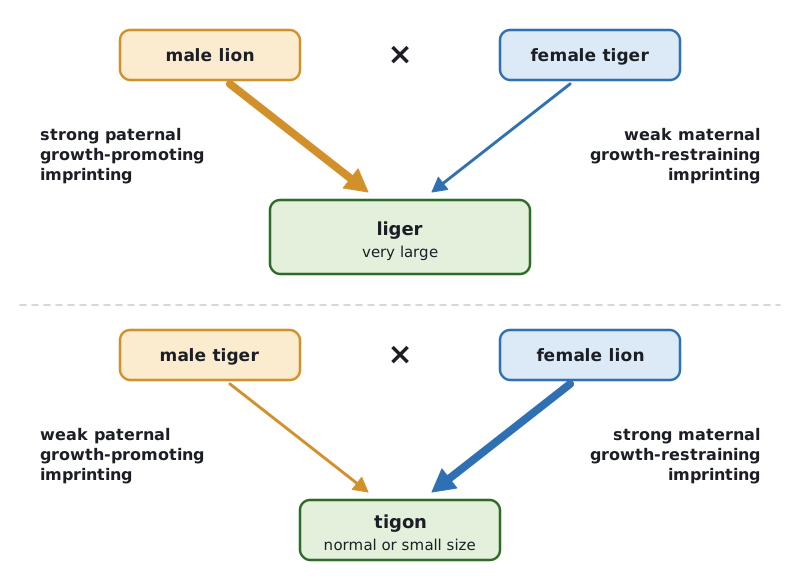 (opens full size in a new tab)
Monozygotic twin studies
Monozygotic (identical) twins develop from one zygote, so they have the same genome. Any differences between them must come from the environment and its effect on gene expression. Studies comparing twins show that their methylation patterns are very similar when they are young but become more different as they get older, especially if they have lived apart with different diets, habits and exposures. This shows the environment changing epigenetic tags.
Linking question: in what ways does the environment stimulate diversification? Twin studies are the classic evidence that the same genotype can produce different phenotypes through epigenetic changes.
Written and checked against the IB Biology HL specification · Updated October 2026