
Phytohormones, auxin efflux carriers and cell growthSpec C3.1.19, C3.1.20, C3.1.21
In short
Phytohormones are signalling chemicals that control growth, development and response to stimuli in plants. Auxin diffuses freely into plant cells but not out, so auxin efflux carriers positioned on one side of each cell actively transport it through the tissue and concentrate it. Auxin promotes cell growth by causing hydrogen ion secretion that loosens cell walls.
Phytohormones are signalling chemicals controlling growth, development and response to stimuli in plants. A variety of chemicals are used as phytohormones, including auxin, cytokinins, gibberellins, abscisic acid and ethylene. They are produced in small amounts and act on target cells, often some distance from where they are made.
Auxin efflux carriers
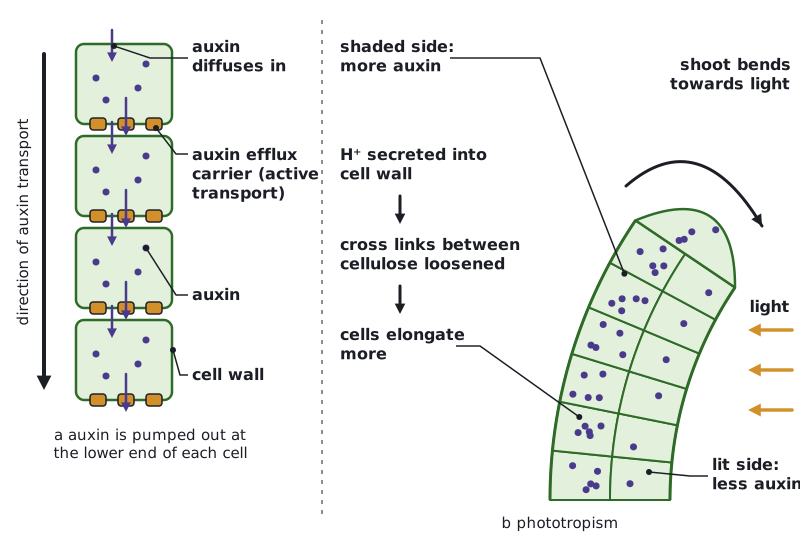
Auxin can diffuse freely into plant cells but not out of them. To leave a cell it must be moved by auxin efflux carriers, membrane proteins that pump auxin out. These carriers can be positioned in the cell membrane on one side of the cell only. If all cells coordinate to concentrate their efflux carriers on the same side, auxin is actively transported from cell to cell through the tissue in one direction, and becomes concentrated in part of the plant. This is how plants maintain concentration gradients of phytohormones.
Promotion of cell growth by auxin
- Auxin binds to receptors in target cells and promotes the secretion of hydrogen ions (by proton pumps) into the apoplast (cell wall).
- The cell wall becomes acidified.
- The low pH loosens cross links between cellulose molecules in the cell wall.
- Water enters the cell by osmosis and turgor pressure stretches the loosened wall, so the cell elongates.
How auxin causes phototropism
Auxin is produced in the shoot tip. When light comes from one side, efflux carriers are repositioned so that more auxin is transported to the shaded side. Concentration gradients of auxin cause the differences in growth rate needed for phototropism: cells on the shaded side elongate faster than cells on the lit side, so the shoot bends towards the light.
 (opens full size in a new tab)
Auxin does not 'diffuse away from the light'. It is actively transported to the shaded side by efflux carriers. The evidence shows that auxin is moved sideways, not that light destroys it on the lit side.
Written and checked against the IB Biology HL specification · Updated October 2026