IB Diploma Biology HL, topic C3
Organisms (Interaction and interdependence)
How the parts of a multicellular organism work together, and how the body defends itself against pathogens. Nerves, hormones and the blood integrate organs into one system, feedback loops regulate heart rate and ventilation, and at HL phytohormones coordinate plant growth. The second topic covers primary defences, innate and adaptive immunity, HIV, antibiotics, zoonoses, vaccines and herd immunity.
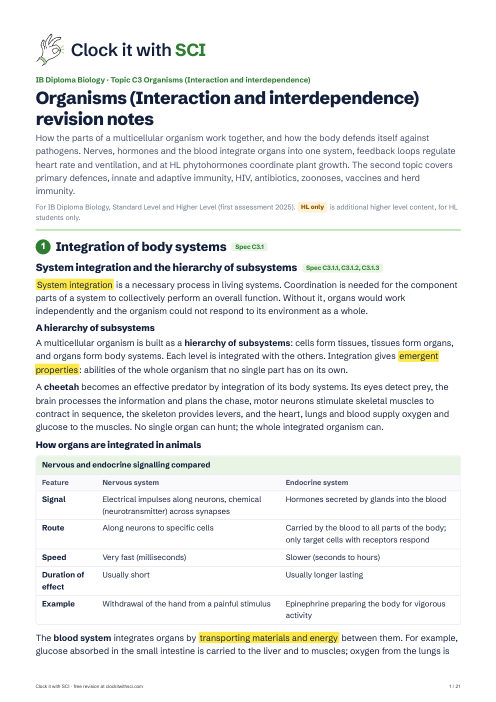 Revision notes
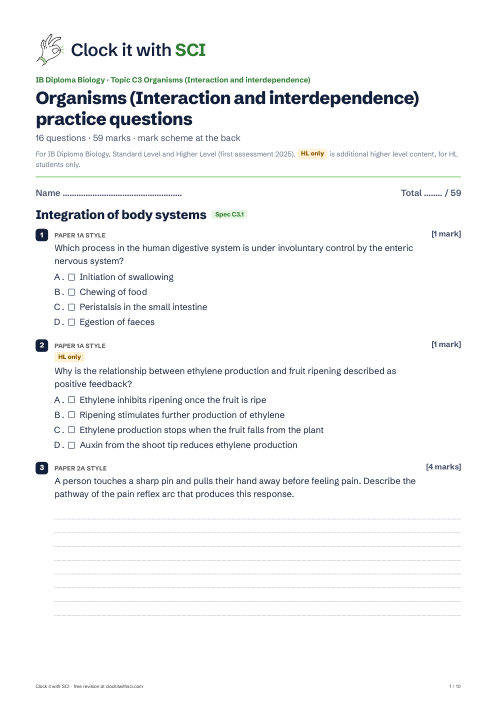 Worksheet
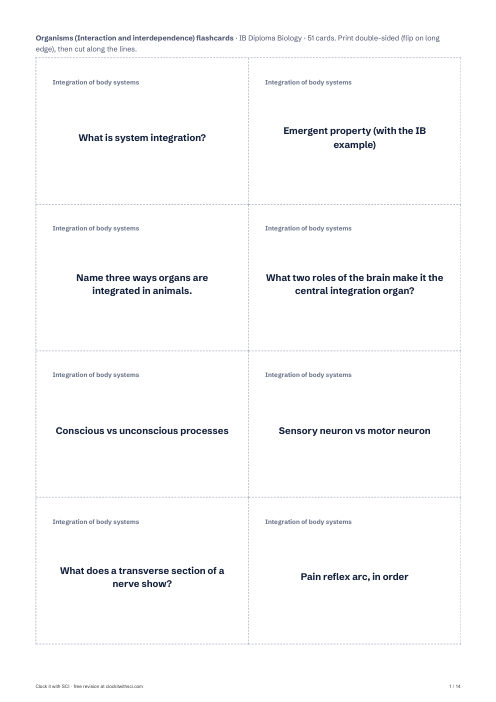 Flashcards
Subtopics
Work through them in order. Each one has notes, exam questions and flashcards, and a PDF of each.
- 1Integration of body systems Spec C3.1IB Biology C3.1: system integration, nerves and hormones, the brain and spinal cord, reflex arcs, feedback control and (HL) plant phytohormones.NotesQuestions 8Flashcards 28
- System integration and the hierarchy of subsystems
- The brain, spinal cord, neurons and nerves
- Pain reflex arcs and the cerebellum
- Melatonin, epinephrine and control by the hypothalamus and pituitary
- Feedback control of heart rate and ventilation rate
- Control of peristalsis by the CNS and enteric nervous system
- Tropic responses in seedlings and positive phototropism HL only
- Phytohormones, auxin efflux carriers and cell growth HL only
- Auxin and cytokinin interactions, and ethylene in fruit ripening HL only
- 2Defence against disease Spec C3.2IB Biology C3.2: pathogens, skin and clotting, innate and adaptive immunity, HIV, antibiotics, zoonoses, vaccines, herd immunity and COVID-19 data.NotesQuestions 8Flashcards 23
- Pathogens as the cause of infectious diseases
- Skin, mucous membranes and blood clotting
- Innate and adaptive immunity, and phagocytes
- Lymphocytes, antigens and antibody production
- Immunity, vaccines and herd immunity
- HIV transmission and AIDS
- Antibiotics and antibiotic resistance
- Zoonoses and evaluating COVID-19 data
Whole topic
When you have done the subtopics: test yourself on everything, or print the lot.