
Antibiotics and antibiotic resistanceSpec C3.2.13, C3.2.14
In short
Antibiotics are chemicals that block processes occurring in bacteria but not in eukaryotic cells, so they kill or inhibit bacteria without harming human cells. They fail to control viral infections because viruses have no metabolism of their own. Resistance to several antibiotics has evolved in pathogenic bacteria by natural selection, so careful use is needed to slow multiresistant bacteria.
How antibiotics work
Antibiotics are chemicals that block processes occurring in bacteria but not in eukaryotic cells. Because these processes or structures differ between prokaryotes and eukaryotes, antibiotics can be used to treat bacterial infections without harming the patient's cells.
| Process in bacteria | Why human cells are unaffected |
|---|---|
| Synthesis of the bacterial cell wall (for example blocked by penicillin) | Animal cells have no cell wall |
| Protein synthesis by 70S ribosomes | Human cytoplasmic ribosomes are 80S, with a different structure |
| Other bacterial enzymes, for example in DNA replication | Eukaryotic enzymes have different structures |
Why antibiotics fail against viruses
- Viruses have no metabolism of their own: they have no cell wall, no ribosomes and no enzymes for respiration or protein synthesis for antibiotics to block.
- Viruses use the host cell's own processes to replicate, and blocking these would harm the host's cells.
Evolution of resistance
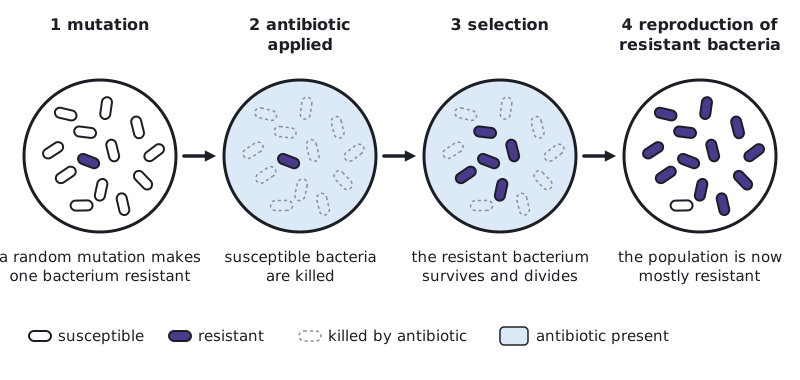
- A random mutation gives a bacterium a gene for resistance to an antibiotic, or the gene is gained from another bacterium on a plasmid.
- When the antibiotic is used, susceptible bacteria are killed but resistant bacteria survive: natural selection.
- Resistant bacteria reproduce rapidly by binary fission, passing on the resistance gene.
- Repeated use of different antibiotics selects strains with resistance to several antibiotics: multiresistant bacteria.
Careful use of antibiotics is necessary to slow the emergence of multiresistant bacteria: prescribing them only for bacterial infections, completing the prescribed course, avoiding routine use in livestock, and good hygiene in hospitals to stop resistant strains spreading.
 (opens full size in a new tab)
Nature of science: new techniques open new avenues of research. Searching chemical libraries (large collections of compounds) is now yielding new antibiotics.
Written and checked against the IB Biology HL specification · Updated October 2026