
Adaptations of mammalian lungsSpec B3.1.4
In short
The alveolar lungs of a mammal are adapted for gas exchange by a branched network of bronchioles ending in millions of alveoli, giving a very high surface area. Extensive capillary beds surround each alveolus, the walls are thin, and surfactant stops the moist alveoli sticking together and collapsing when air is breathed out.
Air enters through the trachea, which divides into two bronchi, one to each lung. Each bronchus divides again and again into a branched network of bronchioles, which end in clusters of tiny air sacs called alveoli.
| Adaptation | How it helps gas exchange |
|---|---|
| Branched network of bronchioles | Carries air to and from hundreds of millions of alveoli spread through the whole lung. |
| High surface area | The very large number of small alveoli gives a huge total surface for diffusion. |
| Extensive capillary beds | Each alveolus is covered in capillaries, so blood flows close to every part of the surface and keeps the gradient steep. |
| Thin walls | The alveolus wall and the capillary wall are each one layer of very thin, flattened cells, so the diffusion distance is short. |
| Surfactant | A fluid secreted by cells in the alveolus wall reduces the surface tension of the water lining, so the alveoli do not stick together and collapse when air is breathed out. |
| Moist lining | Oxygen dissolves in the film of moisture before it diffuses into the blood. |
Oxygen diffuses from the air in the alveolus into the blood, and carbon dioxide diffuses from the blood into the alveolus. Ventilation and continuous blood flow keep both gradients steep.
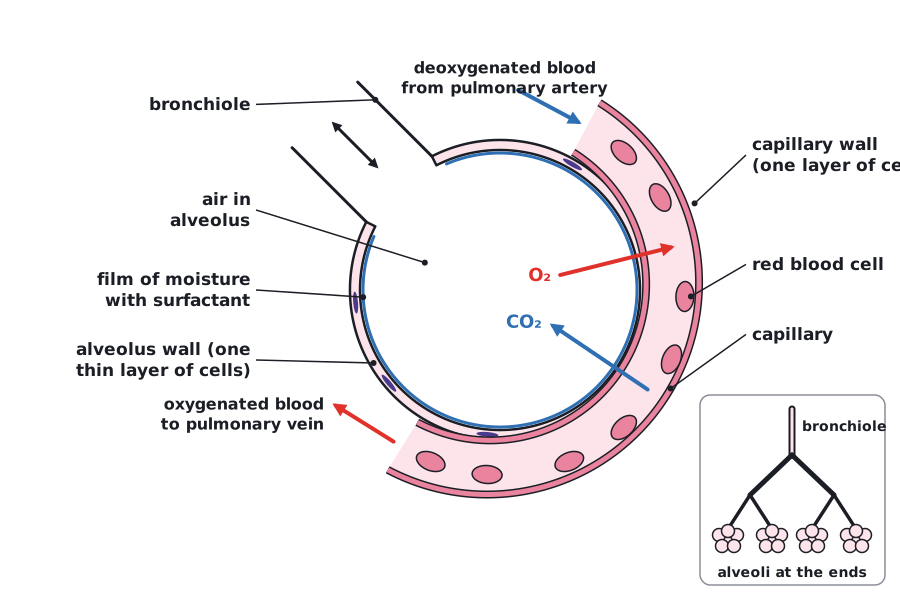 (opens full size in a new tab)
Surfactant does not help gases dissolve or diffuse. Its job is to lower surface tension so the alveoli stay open.
Written and checked against the IB Biology HL specification · Updated October 2026