
CRISPR–Cas9 gene editingSpec D1.3.9
In short
CRISPR–Cas9 gene editing uses a guide RNA matching a target base sequence to lead the enzyme Cas9 to that sequence, where Cas9 cuts both DNA strands. When the cell repairs the cut, the gene may be disabled or a new sequence inserted. It is used in an approved treatment for sickle-cell disease, but some uses raise ethical issues.
How CRISPR–Cas9 editing works
- A guide RNA is made with a base sequence complementary to the target sequence in the gene to be edited.
- The guide RNA is combined with Cas9, an enzyme that cuts DNA (an endonuclease).
- The guide RNA binds by complementary base pairing to the target sequence, bringing Cas9 to exactly that site.
- Cas9 cuts both strands of the DNA at the target site.
- The cell repairs the break. Repair often adds or removes a few nucleotides, which disables (knocks out) the gene. If a DNA template with a desired sequence is supplied, the cell can use it during repair, inserting or correcting a sequence.
The role of the CRISPR–Cas system in prokaryotes is not required.
Example: treating sickle-cell disease
The first approved CRISPR–Cas9 therapy, exagamglogene autotemcel (exa-cel, sold as Casgevy), treats sickle-cell disease. It was authorised in the UK by the MHRA on 16 November 2023 and in the USA by the FDA on 8 December 2023, for patients aged 12 and over. Blood stem cells are collected from the patient's blood and edited outside the body. Cas9 cuts an enhancer (a regulatory sequence) of the gene BCL11A, so red blood cell precursors make much less of the BCL11A protein. BCL11A normally switches off the genes for fetal haemoglobin after birth. The patient receives chemotherapy to clear the old bone marrow, then the edited cells are infused. They produce red blood cells containing fetal haemoglobin, which does not form fibres, and most treated patients in the trials had no severe pain crises for at least a year.
Ethics and regulation
Certain potential uses of CRISPR raise ethical issues that must be addressed before implementation, especially editing embryos or germ cells, because changes would be inherited by future generations without their consent, and editing for enhancement rather than treating disease. Scientists across the world are subject to different regulatory systems, so there is an international effort to harmonise regulation of genome editing technologies such as CRISPR.
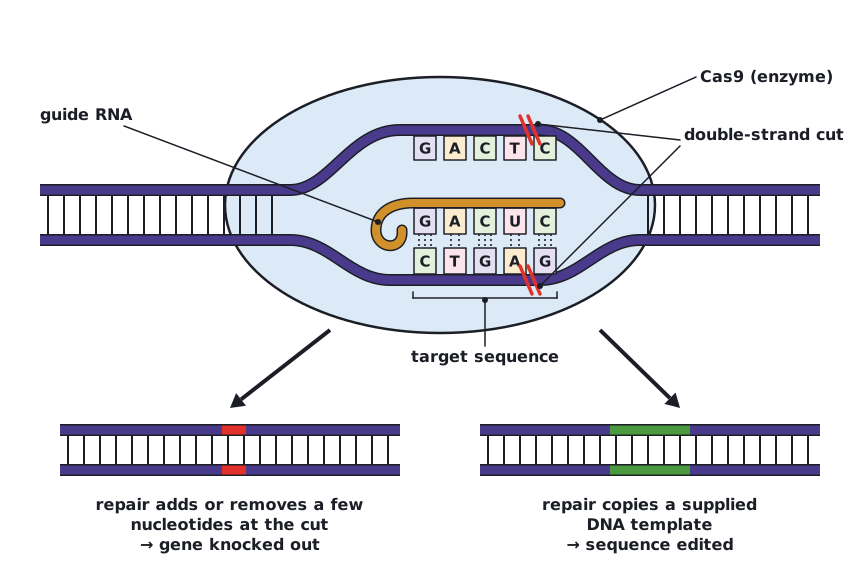 (opens full size in a new tab)
Written and checked against the IB Biology HL specification · Updated October 2026