
Sex determination, sex linkage and haemophiliaSpec D3.2.11, D3.2.12
In short
In humans the sex chromosome in the sperm, X or Y, determines whether a zygote develops male-typical or female-typical characteristics. The X chromosome carries far more genes than the Y, so males have only one copy of most X-linked genes. Haemophilia is a sex-linked recessive disorder, so it is much more common in males.
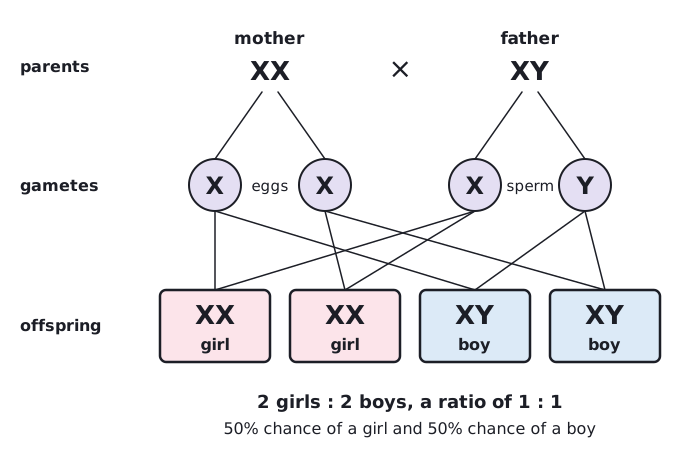
Human body cells have 22 pairs of autosomes and one pair of sex chromosomes: XX in female-typical and XY in male-typical individuals. Every egg carries an X. Half the sperm carry an X and half a Y, so the sex chromosome in the sperm determines the development of the zygote.
- A gene on the Y chromosome (SRY) causes the embryonic gonads to develop into testes. Testosterone from the testes then leads to male-typical characteristics. Without it, ovaries and female-typical characteristics develop.
- The X chromosome is much larger and carries far more genes than the Y chromosome, most of them nothing to do with sex.
- Genes carried on the X chromosome are sex-linked. A male has only one X, so whichever allele he has on it is expressed, even if recessive.
 (opens full size in a new tab)
Haemophilia
In haemophilia the blood clots very slowly because a clotting protein (factor VIII in the commonest type) is missing. The gene is on the X chromosome. The normal allele is Xᴴ and the recessive haemophilia allele Xʰ.
| Genotype | Phenotype |
|---|---|
| XᴴXᴴ | Unaffected female |
| XᴴXʰ | Unaffected carrier female |
| XʰXʰ | Affected female (rare) |
| XᴴY | Unaffected male |
| XʰY | Affected male |
Carrier mother and unaffected father
A carrier woman (XᴴXʰ) and an unaffected man (XᴴY) have children. Deduce the probabilities of the possible outcomes.
- Mother's gametes: Xᴴ or Xʰ. Father's gametes: Xᴴ or Y.
- Punnett grid: XᴴXᴴ, XʰXᴴ, XᴴY, XʰY.
- Daughters: half unaffected, half carriers. Sons: half unaffected, half affected.
Answer: Probability a child is an affected son = 0.25; probability that a son is affected = 0.5; no daughters affected.
A father cannot pass an X-linked allele to his sons, because sons receive his Y. Always write sex-linked alleles as superscripts on an uppercase X.
Written and checked against the IB Biology HL specification · Updated October 2026