
Tyrosine kinase receptors: insulinSpec C2.1.11
In short
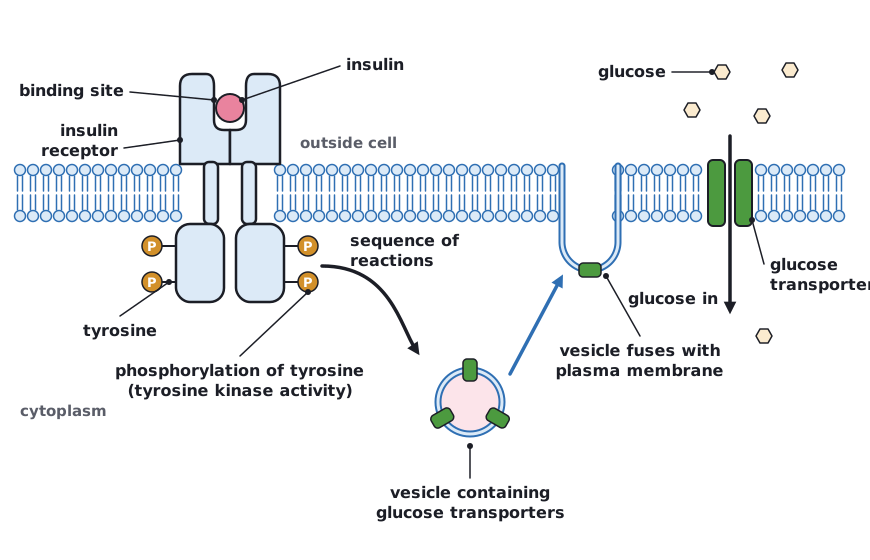
The insulin receptor is a transmembrane receptor with tyrosine kinase activity. When the protein hormone insulin binds outside the cell, tyrosine in the receptor inside the cell is phosphorylated. This starts a sequence of reactions ending with vesicles containing glucose transporters moving to and fusing with the plasma membrane, so the cell absorbs more glucose.
Insulin is a protein hormone, so it cannot cross the plasma membrane. It binds to a transmembrane receptor whose cytoplasmic part acts as an enzyme: a tyrosine kinase, which adds phosphate groups to the amino acid tyrosine.
- Insulin binds to the binding site of the insulin receptor on the outside of the plasma membrane.
- The receptor changes conformation and its tyrosine kinase activity is switched on.
- Phosphate groups (from ATP) are added to tyrosine residues on the part of the receptor inside the cell: phosphorylation of tyrosine.
- Relay proteins recognise the phosphorylated tyrosines and start a sequence of reactions in the cytoplasm.
- This ends with vesicles containing glucose transporters moving to the plasma membrane and fusing with it.
- With more glucose transporters in the membrane, glucose enters the cell faster by facilitated diffusion, lowering blood glucose.
 (opens full size in a new tab)
Insulin does not enter the cell, and it does not carry glucose. It changes how many glucose transporters are in the plasma membrane.
Written and checked against the IB Biology HL specification · Updated October 2026