
Lymphocytes, antigens and antibody productionSpec C3.2.6, C3.2.7, C3.2.8, C3.2.9
In short
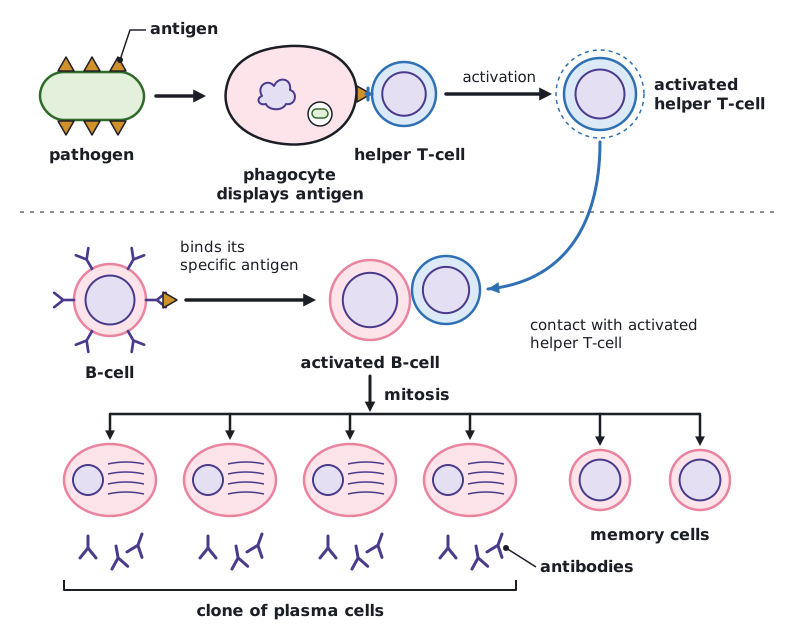
Antigens are recognition molecules, usually glycoproteins or other proteins on pathogen surfaces, that trigger antibody production. Lymphocytes in the blood and lymph nodes cooperate to make antibodies. A specific B-cell is activated by its antigen plus contact with a helper T-cell activated by the same antigen, then divides by mitosis into a clone of antibody-secreting plasma cells.
Lymphocytes
Lymphocytes are the cells of the adaptive immune system. They both circulate in the blood and are contained in lymph nodes. An individual has a very large number of different B-lymphocytes (B-cells), each able to make one specific type of antibody. Lymphocytes cooperate to produce antibodies.
Antigens
An antigen is a recognition molecule that triggers antibody production. Most antigens are glycoproteins or other proteins, usually located on the outer surfaces of pathogens. Each antibody has a binding site with a shape complementary to one antigen.
Antigens on the surface of erythrocytes (for example the A and B antigens of the ABO blood groups) may stimulate antibody production if transfused into a person with a different blood group. For example, a Rhesus-negative person given Rhesus-positive blood makes antibodies against the Rhesus (D) antigen. In the ABO system, a person already has antibodies against the A or B antigen they lack (a person with group A has anti-B), so a mismatched transfusion makes the donated erythrocytes clump (agglutinate).
Activation of B-lymphocytes
There are antigen-specific B-cells and antigen-specific helper T-cells. B-cells produce antibodies and become memory cells only when they have been activated. Activation requires both:
- direct interaction of the B-cell with its specific antigen, and
- contact with a helper T-cell that has also become activated by the same type of antigen (helper T-cells are activated when they bind the antigen, for example displayed on the surface of a phagocyte that has engulfed the pathogen).
Clones of plasma cells
Only a relatively small number of B-cells respond to a specific antigen. To produce sufficient quantities of antibody, activated B-cells first divide by mitosis to produce large numbers of plasma B-cells (plasma cells), all capable of producing the same type of antibody. This group of identical cells is a clone. Plasma cells have extensive rough endoplasmic reticulum and secrete antibodies into the blood.
 (opens full size in a new tab)
Antibodies are made by plasma cells, not by helper T-cells or phagocytes. Helper T-cells activate B-cells but do not make antibodies.
Written and checked against the IB Biology HL specification · Updated October 2026