
The link reaction and the Krebs cycleSpec C1.2.11, C1.2.12
In short
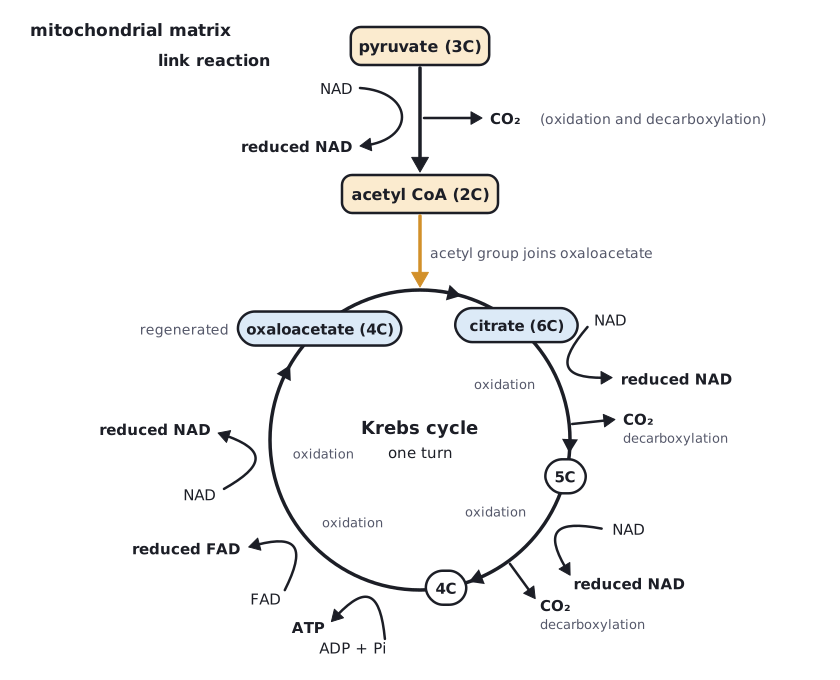
In the link reaction, pyruvate in the mitochondrial matrix is oxidised and decarboxylated, and the acetyl group is transferred by coenzyme A to the Krebs cycle. In the cycle, the acetyl group joins oxaloacetate (4C) to form citrate (6C). Two decarboxylations and four oxidations regenerate oxaloacetate, releasing carbon dioxide and producing reduced NAD and ATP.
The link reaction
In aerobic respiration, pyruvate from glycolysis is transported into the mitochondrial matrix. There it undergoes oxidation (hydrogen removed, NAD reduced) and decarboxylation (carbon removed as CO₂). The remaining 2C acetyl group is attached to coenzyme A, forming acetyl CoA, which transfers the acetyl group to the Krebs cycle.
Lipids and carbohydrates are both metabolised to form acetyl groups (2C), so this is where the pathways for different respiratory substrates join. Per glucose the link reaction happens twice.
The Krebs cycle
- The acetyl group (2C) is transferred from coenzyme A to oxaloacetate (4C), forming citrate (6C). Coenzyme A is released to collect another acetyl group.
- Citrate is converted back to oxaloacetate by a series of reactions that include two decarboxylations, releasing 2 CO₂.
- The cycle includes four oxidations, which are dehydrogenation reactions. Three of them reduce NAD; the fourth reduces another hydrogen carrier, FAD. Reduced FAD also passes its electrons to the electron transport chain, but IB questions focus on NAD.
- One ATP is produced directly in each turn.
- Oxaloacetate is regenerated, so the cycle can accept another acetyl group.
| Product | Per turn | Per glucose |
|---|---|---|
| CO₂ | 2 | 4 |
| Reduced NAD | 3 | 6 |
| Reduced FAD | 1 | 2 |
| ATP | 1 | 2 |
 (opens full size in a new tab)
Name only citrate and oxaloacetate. Remember the counts: two decarboxylations and four oxidations per turn, and two turns per glucose.
Written and checked against the IB Biology HL specification · Updated October 2026