
Cross-pollination and self-incompatibilitySpec D3.1.10, D3.1.11
In short
Cross-pollination is the transfer of pollen between flowers on different plants. Plants promote it by different maturation times for pollen and stigma, separate male and female flowers or plants, and transfer by animals or wind. Self-incompatibility mechanisms make gametes that fuse come from different plants, preventing inbreeding, which decreases genetic diversity and vigour.
Self-pollination (pollen reaching a stigma of the same plant) leads to inbreeding. Offspring become more homozygous, so genetic diversity falls and harmful recessive alleles are expressed more often, reducing vigour. Cross-pollination transfers pollen to a different plant of the same species.
Methods of promoting cross-pollination
- Different maturation times: the anthers release pollen before the stigma of the same flower is receptive (or the other way round), so pollen has to come from another flower.
- Separate male and female flowers on the same plant, for example maize, with male flowers at the top and female flowers lower down.
- Separate male and female plants, for example holly: a female plant can only be pollinated by pollen from a male plant.
- Animals or wind carry pollen between plants: insects, birds and bats travel from flower to flower, and wind carries light pollen long distances.
Self-incompatibility
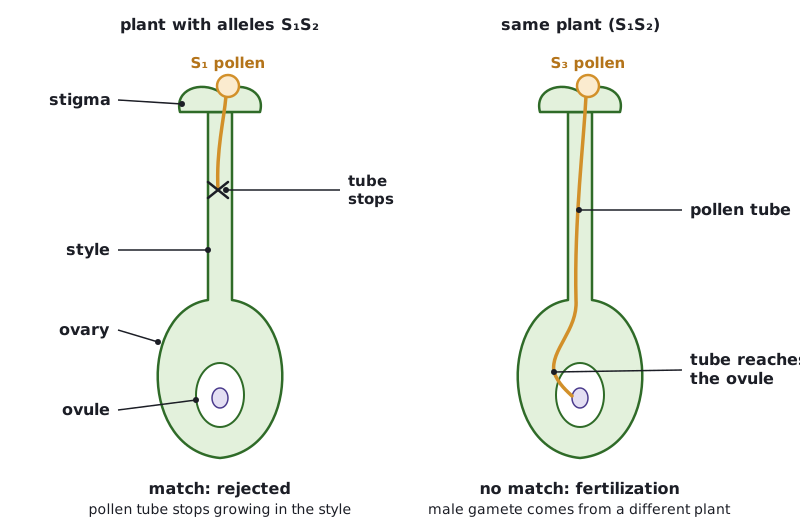
In many species a self-incompatibility gene (often called the S gene) has many alleles. In the commonest type, if the S allele carried by a pollen grain matches either S allele of the plant it lands on, the pollen is recognised as 'self' and its pollen tube stops growing in the style. In some other species, such as the cabbage family, the pollen's S type is set by the plant that made it, and matching pollen fails to germinate on the stigma.
- Pollen from the same plant always matches, so self-fertilization is blocked.
- Pollen from a plant with different S alleles grows normally, so male and female gametes that fuse come from different plants.
- This keeps genetic variation within the species high.
 (opens full size in a new tab)
Linking question: how can interspecific relationships assist reproductive strategies? Animal pollinators gain nectar or pollen as food while carrying pollen between plants.
Written and checked against the IB Biology HL specification · Updated October 2026