
Male and female sexes and human reproductive systemsSpec D3.1.3, D3.1.4
In short
The prime difference between the sexes is that the male gamete travels to the female gamete, so it is smaller with less food reserves than the egg. Males therefore produce far more gametes. The human male system makes and delivers sperm; the female system makes eggs and supports a developing embryo and foetus.
The prime difference between the sexes is that the male gamete travels to the female gamete. A moving cell must be small, so sperm have very little cytoplasm and almost no food reserves. The egg does not move, so it can be large and store food reserves for the early embryo.
- Numbers of gametes: small gametes are cheap to make, so males produce huge numbers (millions of sperm per ejaculation); females produce few, large eggs (usually one per menstrual cycle in humans).
- Reproductive strategies: because eggs are scarce and costly, females usually invest more in each offspring (here, pregnancy and lactation); males can potentially father many offspring and often compete for mates.
Male reproductive system
| Structure | Function |
|---|---|
| Testis | Produces sperm in seminiferous tubules and secretes testosterone |
| Scrotum | Holds the testes outside the body, about 2–3 °C below core temperature, which sperm production needs |
| Epididymis | Stores sperm while they mature and gain the ability to swim |
| Sperm duct (vas deferens) | Carries sperm from the epididymis towards the urethra during ejaculation |
| Seminal vesicle | Secretes fluid containing fructose (energy for sperm) and mucus into semen |
| Prostate gland | Secretes an alkaline fluid that helps neutralise acidity in the vagina |
| Urethra | Carries semen (and urine) out through the penis |
| Penis | Becomes erect to deliver semen into the vagina |
Female reproductive system
| Structure | Function |
|---|---|
| Ovary | Contains follicles that develop eggs; releases an egg at ovulation; secretes oestradiol and progesterone |
| Oviduct (fallopian tube) | Carries the egg towards the uterus; site of fertilization |
| Uterus | Muscular organ in which the embryo implants and the foetus develops |
| Endometrium | Blood-rich lining of the uterus that thickens each cycle, ready for implantation |
| Cervix | Ring of muscle at the base of the uterus; keeps the foetus in place and dilates at birth |
| Vagina | Receives the penis and sperm; the birth canal |
| Vulva | External genitalia that protect the vaginal opening |
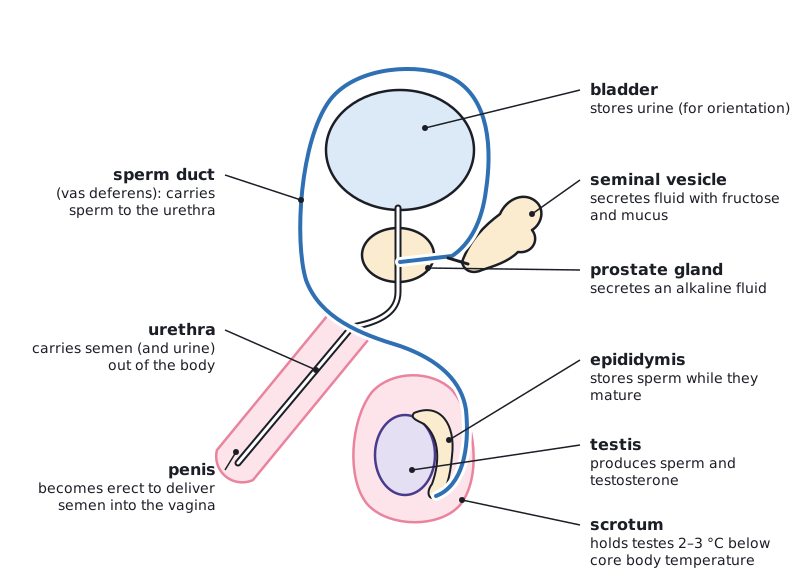 (opens full size in a new tab)
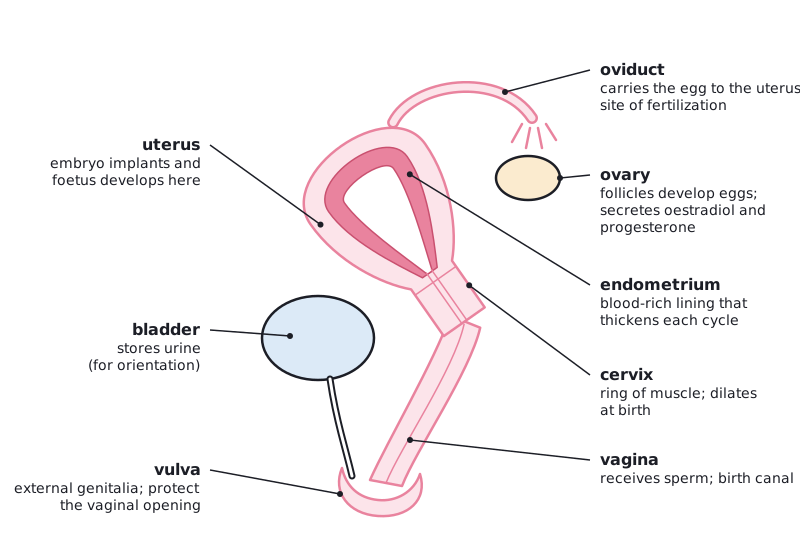 (opens full size in a new tab)
Drawing questions want labels with functions. Draw clear single lines, use a ruler for label lines and write the function next to each structure.
Written and checked against the IB Biology HL specification · Updated October 2026