
Puberty, spermatogenesis and oogenesisSpec D3.1.13, D3.1.14
In short
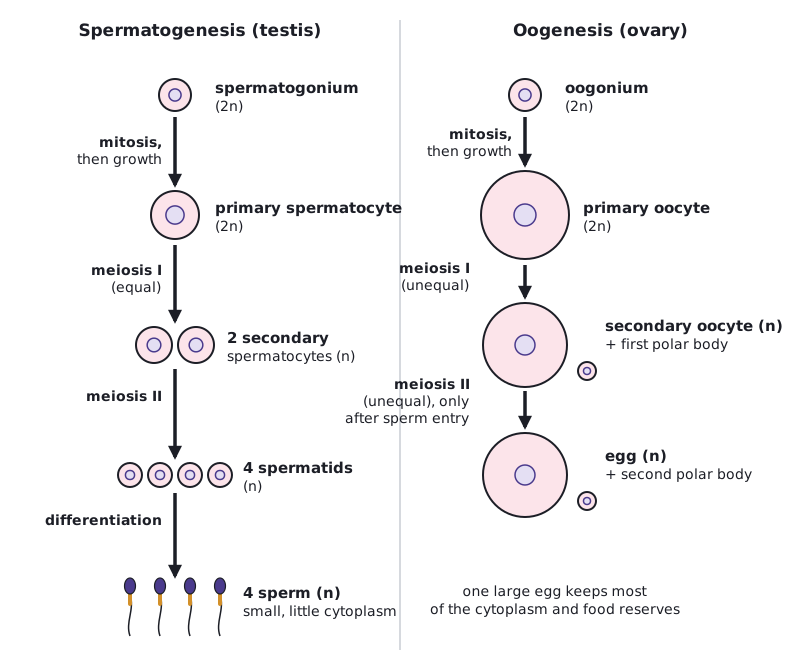
Puberty is triggered when the hypothalamus increases its release of gonadotropin-releasing hormone (GnRH) in late childhood, causing more LH and FSH release and so more sex hormone production. Spermatogenesis and oogenesis both involve mitosis, cell growth, two divisions of meiosis and differentiation, but give many small sperm and few eggs with much cytoplasm.
Control of puberty
- In late childhood the hypothalamus increases its release of gonadotropin-releasing hormone (GnRH).
- GnRH stimulates the anterior pituitary to increase release of LH and FSH.
- LH and FSH stimulate the gonads to produce more steroid sex hormones: testosterone in the testes, and oestradiol and progesterone in the ovaries.
- The increased sex hormones cause the changes of puberty, such as growth of the reproductive organs, the start of gamete production and secondary sexual characteristics.
Gametogenesis
| Stage | Spermatogenesis (testis) | Oogenesis (ovary) |
|---|---|---|
| Mitosis | Germ cells (spermatogonia) in the wall of the seminiferous tubules divide by mitosis throughout adult life | Germ cells (oogonia) divide by mitosis in the ovary before birth |
| Cell growth | Some cells grow into primary spermatocytes | Cells grow into primary oocytes, each inside a follicle; meiosis I starts but pauses |
| Meiosis I | Each primary spermatocyte divides equally into two secondary spermatocytes | In each menstrual cycle one primary oocyte completes meiosis I, unequally: one secondary oocyte gets nearly all the cytoplasm, the other cell is a small first polar body |
| Meiosis II | Gives four haploid spermatids | Completed only after a sperm enters; unequal again, giving the egg and a second polar body |
| Differentiation | Spermatids develop into sperm with a tail, mitochondria and an acrosome, helped by Sertoli cells | The egg keeps a large volume of cytoplasm with food reserves |
| Outcome | Four small sperm per primary spermatocyte; millions produced every day | One large egg per primary oocyte; usually one released per cycle |
 (opens full size in a new tab)
Exam tip:
Linking question: what biological processes involve doubling and halving? Meiosis halves the chromosome number in gametes and fertilization doubles it again.
Written and checked against the IB Biology HL specification · Updated October 2026