
Pregnancy testing and the placentaSpec D3.1.17, D3.1.18
In short
A pregnancy test detects human chorionic gonadotropin (hCG), a hormone produced by the embryo and developing placenta, using monoclonal antibodies that bind to hCG in urine. The placenta is the exchange organ between maternal and foetal blood; its villi give a large surface area, and it lets the foetus stay in the uterus to a later stage of development.
Pregnancy testing
From soon after implantation the embryo, and then the developing placenta, secretes human chorionic gonadotropin (hCG). Some hCG passes into the urine, where a test strip can detect it.
- Urine is applied to one end of the strip. It moves along by capillary action.
- In the first zone, mobile monoclonal antibodies that bind hCG are attached to a coloured marker. Any hCG binds to them.
- In the test line, monoclonal antibodies against hCG are fixed to the strip. They bind the hCG–antibody–marker complex, so colour builds up: a line appears only if hCG is present.
- In the control line, fixed antibodies bind the mobile antibodies whether or not hCG is present. This line shows the test has worked.
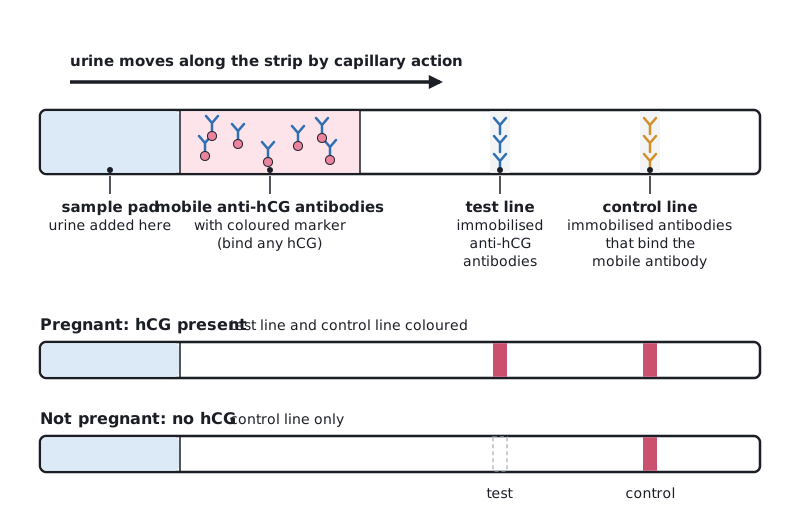 (opens full size in a new tab)
Role of the placenta
The placenta forms from foetal tissue and the endometrium. Foetal blood flows in capillaries inside placental villi, which project into spaces filled with maternal blood. The villi give a large surface area for exchange, and the two bloods do not mix.
| Direction | Substances |
|---|---|
| Mother to foetus | Oxygen, glucose, amino acids, fatty acids, water, mineral ions, vitamins, some antibodies |
| Foetus to mother | Carbon dioxide, urea and other wastes |
Because the placenta supplies everything the foetus needs and removes its wastes, the foetus can be retained in the uterus to a later stage of development than in mammals that do not develop a placenta, such as marsupials, whose young are born very small and finish developing in a pouch.
Linking question: what are the roles of barriers in living systems? The placenta keeps maternal and foetal blood separate while still allowing exchange.
Written and checked against the IB Biology HL specification · Updated October 2026