
Quaternary structure: non-conjugated and conjugated proteinsSpec B1.2.11
In short
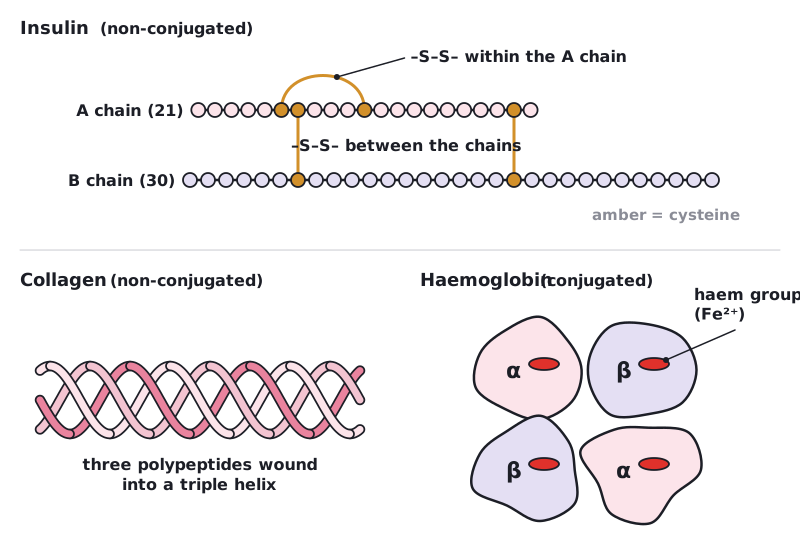
Quaternary structure is the linking of two or more polypeptides to form a single protein. Non-conjugated proteins consist only of polypeptides, for example insulin (two chains) and collagen (three chains). Conjugated proteins also contain a non-polypeptide component, for example haemoglobin, which has four polypeptides each with a haem group containing iron that binds oxygen.
Many proteins consist of a single polypeptide. Others are made of two or more polypeptides linked together; this arrangement is quaternary structure. The chains are held together by the same types of interaction as tertiary structure.
- Non-conjugated protein
- A protein made only of polypeptides.
- Conjugated protein
- A protein with one or more non-polypeptide components (prosthetic groups) as well as polypeptides.
| Protein | Polypeptides | Non-polypeptide part | Type |
|---|---|---|---|
| Insulin | Two: an A chain (21 amino acids) and a B chain (30 amino acids) linked by two disulfide bonds | None | Non-conjugated |
| Collagen | Three, wound together into a triple helix | None | Non-conjugated |
| Haemoglobin | Four: two alpha and two beta chains | Four haem groups, each containing an iron ion that binds one O₂ | Conjugated |
In haemoglobin each polypeptide holds one haem group, so one molecule carries up to four oxygen molecules. The haem is not made of amino acids, which is what makes haemoglobin conjugated. Insulin and collagen are made only of polypeptide chains.
Insulin is first made as one long polypeptide, proinsulin. A middle section is then cut out, leaving two chains that are held together by disulfide bonds. The IB guide uses insulin's two linked chains as an example of quaternary structure.
 (opens full size in a new tab)
Nature of science: technology lets us see what the unaided senses cannot. Cryogenic electron microscopy rapidly freezes protein samples and combines many images of single molecules into 3D structures, showing proteins and their interactions with other molecules.
Written and checked against the IB Biology HL specification · Updated October 2026