
Receptors, ligands and quorum sensingSpec C2.1.1, C2.1.2
In short
A receptor is a protein with a binding site for a specific signalling chemical, called a ligand. The ligand and binding site match in shape and chemical properties. In quorum sensing, bacteria such as Vibrio fischeri detect their own population density from the concentration of a signalling chemical and switch on bioluminescence only when the density is high.
Cells receive many different chemical signals. Each signal is detected by a receptor: a protein with a binding site for one specific signalling chemical. The IB term for the signalling chemical is the ligand.
- The binding site has a shape and chemical properties (charge, polarity) that are complementary to the ligand, so only that ligand binds.
- Binding is reversible: the ligand binds, causes a change in the receptor, then leaves.
- When the ligand binds, the receptor changes conformation (shape). This change is what passes the signal on.
- A cell responds only to the ligands it has receptors for. This is how cells distinguish between the many signals they receive.
Quorum sensing in Vibrio fischeri
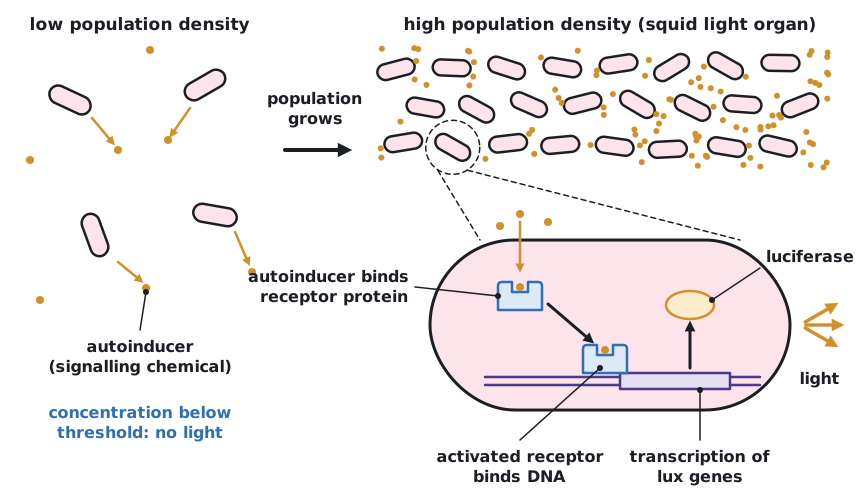
Bacteria also signal to each other. Quorum sensing is cell signalling in which bacteria detect the density of their own population and respond only when it is high. The marine bacterium Vibrio fischeri lives freely in sea water and also at very high density in the light organ of some squid and fish. It produces light (bioluminescence) only at high density.
- Each V. fischeri cell makes a small signalling chemical (an autoinducer) and releases it. It diffuses freely across the bacterial membranes.
- At low population density the autoinducer diffuses away, so its concentration stays low.
- At high density, as in a light organ, the autoinducer accumulates and binds to receptor proteins inside the cells.
- The activated receptor promotes transcription of the genes for bioluminescence, including the enzyme luciferase, so the whole population glows together.
- The same genes include one for making more autoinducer, so the response reinforces itself (positive feedback).
Light production uses a lot of energy. A single cell's light would be useless, so it only pays when many cells glow together. The squid host benefits from the light; the bacteria gain nutrients and a place to live.
 (opens full size in a new tab)
Always call the signalling chemical a ligand and say it binds to a specific binding site on the receptor. Avoid 'active site', which is for enzymes and substrates.
Written and checked against the IB Biology HL specification · Updated October 2026