Regulation of blood glucose

Organisms (Continuity and change) · Homeostasis · note 2 of 7

Regulation of blood glucoseSpec D3.3.3

In short

Blood glucose regulation is an example of hormones in homeostasis. Pancreatic endocrine cells secrete insulin when blood glucose is high and glucagon when it is low, and the blood carries them to target cells: insulin makes liver and muscle cells absorb glucose and store it as glycogen; glucagon makes liver cells break glycogen down to glucose.

The pancreas contains clusters of endocrine cells called islets of Langerhans. They secrete hormones directly into blood capillaries, which carry them around the body to target cells with the right receptors.

Insulin and glucagon
InsulinGlucagon
Secreted byβ (beta) cells of the isletsα (alpha) cells of the islets
StimulusBlood glucose above the set point (e.g. after a meal)Blood glucose below the set point (e.g. fasting, exercise)
Target cellsLiver, skeletal muscle and adipose cellsMainly liver cells (hepatocytes)
EffectsMore glucose transporters inserted into membranes, so cells absorb glucose; glucose converted to glycogen (and fat); more glucose used in respirationGlycogen broken down to glucose, which is released into the blood; glucose also made from other compounds
ResultBlood glucose fallsBlood glucose rises
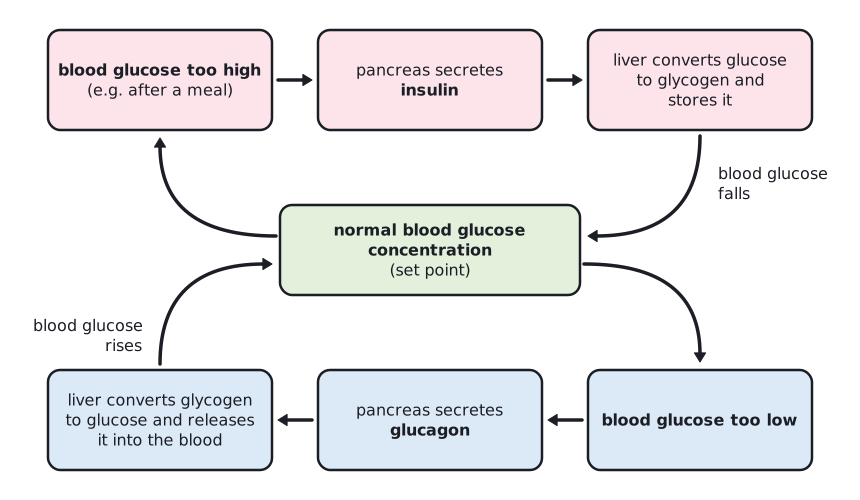
Negative feedback loop: when blood glucose is too high the pancreas secretes insulin and the liver converts glucose to glycogen; when blood glucose is too low the pancreas secretes glucagon and the liver converts glycogen to glucose, returning blood glucose to the set point. (opens full size in a new tab)
Blood glucose is controlled by negative feedback: insulin lowers it and glucagon raises it. The figure shows the liver; insulin also makes skeletal muscle and adipose cells absorb glucose.
Common mistake:

Glucagon, glycogen and glucose are easily confused. Glucagon is the hormone; glycogen is the storage polysaccharide; glucose is the sugar in the blood.

Written and checked against the IB Biology HL specification · Updated October 2026

Frequently asked questions

Why does homeostasis use negative feedback rather than positive feedback?

Negative feedback reverses any change from the set point, so it returns a variable to normal whether it rises above or falls below it. Positive feedback amplifies a change away from the set point, which would make an imbalance worse. That is why positive feedback only controls processes that must finish quickly, such as childbirth.

How do insulin and glucagon control blood glucose?

When blood glucose rises, β cells in the pancreatic islets secrete insulin, which makes liver and muscle cells absorb glucose and store it as glycogen. When blood glucose falls, α cells secrete glucagon, which makes liver cells break glycogen down and release glucose. Both hormones travel to their target cells in the blood.

What is the difference between type 1 and type 2 diabetes?

In type 1 diabetes the immune system destroys the insulin-secreting β cells, so little or no insulin is made and insulin must be injected. In type 2 diabetes insulin is still produced but target cells become resistant to it. Type 2 is linked to obesity and inactivity and is managed mainly by diet and exercise.

All 5 questions on Homeostasis