
Innate and adaptive immunity, and phagocytesSpec C3.2.4, C3.2.5
In short
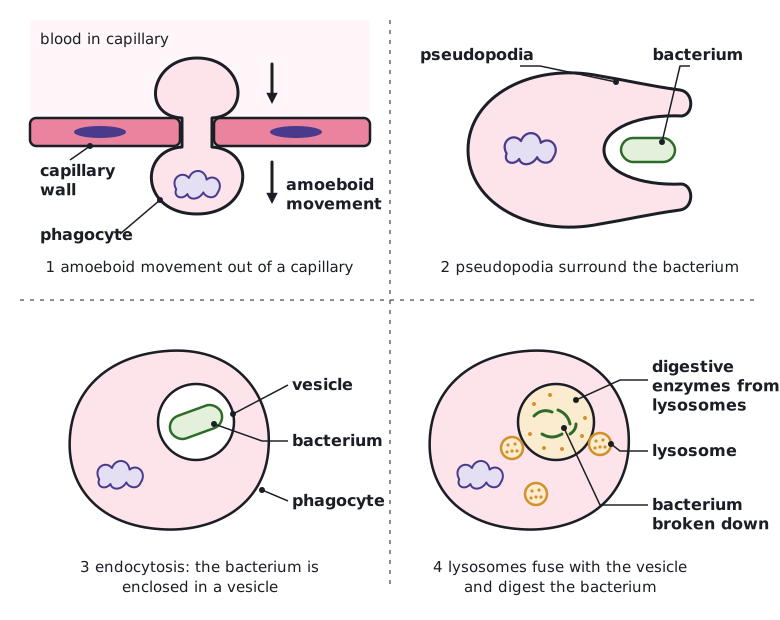
The innate immune system responds to broad categories of pathogen and does not change during life, whereas the adaptive immune system responds specifically to particular pathogens and builds up a memory of them. Phagocytes, part of the innate system, reach infection sites by amoeboid movement, engulf pathogens by endocytosis and digest them with lysosome enzymes.
| Feature | Innate immune system | Adaptive immune system |
|---|---|---|
| What it responds to | Broad categories of pathogen | Particular pathogens, in a specific way |
| Change during life | Does not change during an organism's life | Builds up a memory of pathogens encountered |
| Effect of a second infection | Same response as the first time | Response becomes faster and more effective |
| Cells | Phagocytes | Lymphocytes (B-cells and T-cells) |
Both systems work together: the innate system responds immediately to any infection, while the adaptive system takes longer the first time but produces a targeted response with long-term memory.
Infection control by phagocytes
- Phagocytes circulate in the blood. At a site of infection they squeeze out of capillaries through gaps between the wall cells by amoeboid movement.
- They move through the tissue to the pathogens and recognize them as foreign.
- The phagocyte engulfs the pathogen by endocytosis, enclosing it in a vesicle.
- Lysosomes fuse with the vesicle and release enzymes that digest the pathogen.
 (opens full size in a new tab)
Phagocytes are the only components of the innate immune system you need to know. Use the words amoeboid movement, endocytosis and lysosomes in answers.
Written and checked against the IB Biology HL specification · Updated October 2026