
Differences between DNA and RNASpec A1.2.7
In short
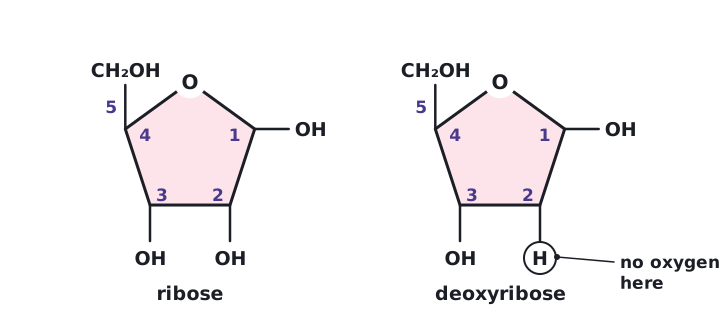
DNA and RNA differ in three ways examiners look for. DNA is usually double-stranded, while RNA is single-stranded. DNA contains thymine, while RNA contains uracil in its place. DNA contains the sugar deoxyribose, while RNA contains ribose, which has an extra oxygen as an OH group on carbon 2. Examples of RNA include mRNA, tRNA and rRNA.
| Feature | DNA | RNA |
|---|---|---|
| Number of strands | Two (double helix) | One |
| Nitrogenous bases | A, T, G, C | A, U, G, C (uracil instead of thymine) |
| Pentose sugar | Deoxyribose | Ribose |
Ribose and deoxyribose
Both sugars are pentoses with a five-membered ring containing an oxygen atom. The difference is on carbon 2: ribose has an OH group there, while deoxyribose has only H, so it has one oxygen atom fewer ('deoxy' means without oxygen).
 (opens full size in a new tab)
Examples of nucleic acids
- DNA: the genetic material, found in chromosomes in the nucleus, and in mitochondria, chloroplasts and the cytoplasm of prokaryotes.
- Messenger RNA (mRNA): a copy of a gene, carried to ribosomes.
- Transfer RNA (tRNA): carries amino acids to the ribosome during translation.
- Ribosomal RNA (rRNA): part of the structure of ribosomes.
In a compare question, write each difference as a matched pair, such as 'DNA contains deoxyribose but RNA contains ribose'. Stating only one side rarely scores.
Written and checked against the IB Biology HL specification · Updated October 2026