
Applications of PCR and gel electrophoresisSpec D1.1.5
In short
DNA profiling is the main application of PCR and gel electrophoresis: regions of DNA that vary in length between people are amplified and separated, giving a pattern of bands. Profiles are compared in paternity tests and forensic investigations. Using more markers makes the test more reliable, because it reduces the probability that two unrelated people match by chance.
Because PCR can amplify a chosen sequence from a tiny sample and gel electrophoresis can separate fragments by length, the two techniques have a broad range of applications.
- DNA profiling for paternity and forensic investigations.
- Detecting pathogens: PCR detects DNA (or RNA copied into DNA) of a virus or bacterium in a patient sample, as in tests for viral infections.
- Genetic screening: testing for alleles that cause genetic conditions.
- Research: amplifying genes for sequencing or for comparing species.
DNA profiling
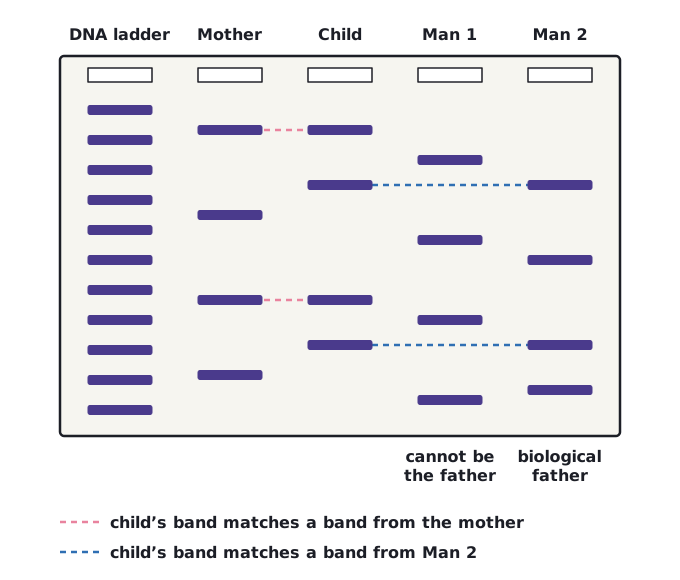
Some regions of the genome contain short tandem repeats (STRs): a short base sequence repeated many times. The number of repeats at each region varies between individuals, so the length of the region varies. In DNA profiling, several of these regions are amplified by PCR and the fragments are separated by gel electrophoresis, giving a pattern of bands (a DNA profile) that is almost unique to each person.
| Use | How profiles are compared |
|---|---|
| Paternity | A child inherits one allele of each region from each parent. Every band in the child's profile must match a band in the mother's or in the father's profile. A man whose profile lacks the non-maternal bands cannot be the father. |
| Forensic investigation | DNA from blood, hair or skin cells at a crime scene is amplified and profiled, then compared with profiles from suspects. A match links a person to the scene; a mismatch excludes them. |
Nature of science: reliability is enhanced by increasing the number of measurements. In DNA profiling, using more markers (more STR regions) reduces the probability of a false match between two different people.
 (opens full size in a new tab)
Written and checked against the IB Biology HL specification · Updated October 2026