
Hormones in pregnancy and childbirth, and HRTSpec D3.1.19, D3.1.20
In short
Pregnancy is maintained by progesterone, secreted first by the corpus luteum and then by the placenta. Childbirth is triggered when progesterone levels fall, allowing oxytocin secretion to increase; oxytocin causes uterine contractions, which stimulate more oxytocin release by positive feedback. Hormone replacement therapy studies show that a correlation with lower heart disease was not cause and effect.
Hormonal control of pregnancy
- The embryo secretes hCG, which keeps the corpus luteum alive instead of letting it degenerate.
- The corpus luteum continues secreting progesterone (and oestradiol), which maintains the endometrium and prevents menstruation.
- Progesterone also inhibits contractions of the uterus muscle (myometrium) and inhibits FSH and LH, so no new cycle starts.
- From about the end of the third month the placenta secretes enough progesterone itself, and the corpus luteum degenerates. Placental progesterone maintains the pregnancy to term.
Childbirth
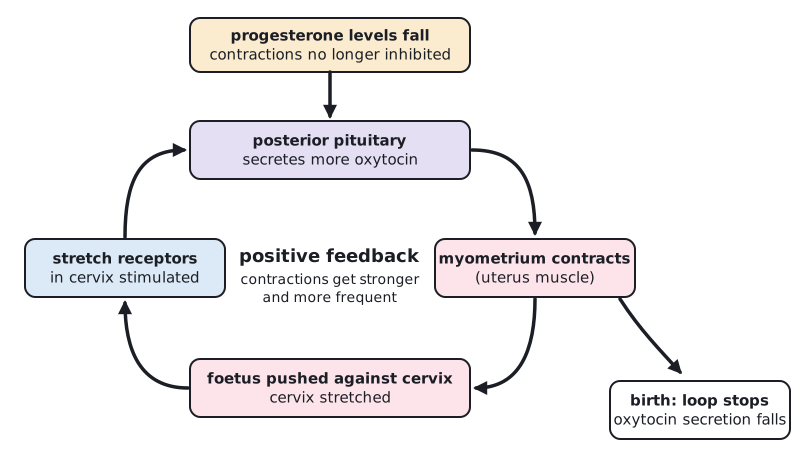
- At the end of pregnancy progesterone levels decrease, so contractions are no longer inhibited.
- This allows the posterior pituitary to increase secretion of oxytocin.
- Oxytocin stimulates contractions of the myometrium. Contractions push the foetus against the cervix, and stretch receptors there stimulate more oxytocin secretion.
- This is positive feedback: contractions become stronger and more frequent until the baby is born, then oxytocin secretion falls.
 (opens full size in a new tab)
Hormone replacement therapy and coronary heart disease
After the menopause the ovaries stop secreting oestradiol and progesterone. Hormone replacement therapy (HRT) gives these hormones to relieve symptoms.
- Early epidemiological studies found that women taking HRT had a lower incidence of coronary heart disease (CHD). This was taken to be cause and effect.
- Later randomized controlled trials, where women were randomly given HRT or a placebo, showed that HRT led to a small increase in the risk of CHD.
- The original correlation was explained by a confounding factor: HRT patients tended to have a higher socioeconomic status, and higher socioeconomic status itself causes a lower risk of CHD.
Nature of science: a correlation does not prove causation. Randomized controlled trials remove confounding factors by random allocation to treatment and control groups.
Quick check
State one advantage of asexual reproduction.
Show answer
Offspring are genetically identical to a parent that is already adapted to the existing environment.
Which hormone surge triggers ovulation, and what causes it?
Show answer
An LH surge, caused by positive feedback from high oestradiol levels.
What happens to the sperm's tail and mitochondria at fertilization?
Show answer
They are destroyed; only the sperm nucleus contributes.
What is the function of the stigma?
Show answer
A sticky surface that receives pollen.
HL only Which reaction prevents polyspermy?
Show answer
The cortical reaction, which alters the zona pellucida so other sperm cannot pass through.
Written and checked against the IB Biology HL specification · Updated October 2026