Intracellular receptors and steroid hormones

Cells (Interaction and interdependence) · Chemical signalling · note 6 of 7

Spec C2.1.12, C2.1.13
HL only (what this means)HL only: additional Higher Level content, only for HL students. SL students can skip it. What the labels mean
Download all Chemical signalling notes (PDF)Download all notes (PDF)10 pages

Intracellular receptors and steroid hormonesSpec C2.1.12, C2.1.13

In short

Steroid hormones such as oestradiol, progesterone and testosterone are hydrophobic, so they pass through the plasma membrane and bind to intracellular receptors. The activated receptor binds to specific DNA sequences and promotes transcription of particular genes. Oestradiol acts on hypothalamus cells that secrete GnRH; progesterone acts on cells of the endometrium.

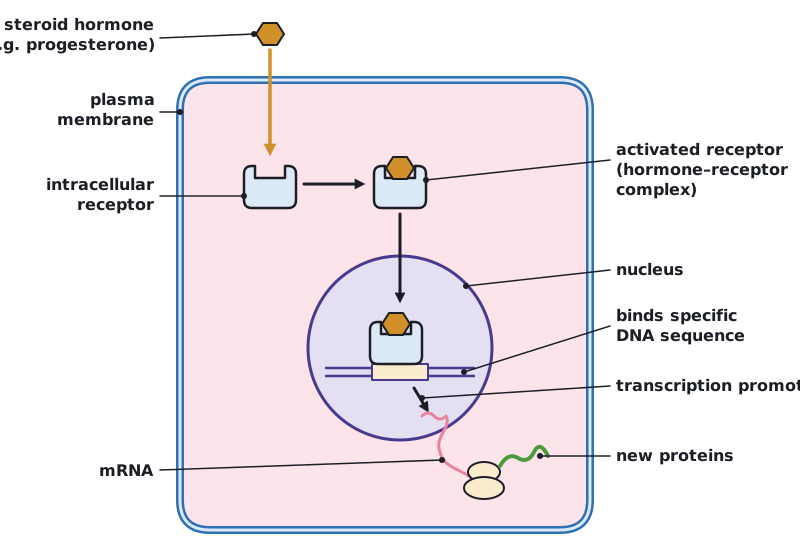
  1. A steroid hormone diffuses through the phospholipid bilayer of the target cell.
  2. It binds to a binding site on its specific receptor in the cytoplasm or nucleus, activating the receptor.
  3. The activated hormone–receptor complex binds to specific DNA sequences next to target genes.
  4. This promotes transcription of those genes, so new proteins are made and the cell's activity changes.

Examples are oestradiol, progesterone and testosterone. Because the response needs transcription and translation, steroid effects are slower to start but longer lasting than effects through membrane receptors.

Effects on target cells

Two steroid hormones and their target cells
HormoneTarget cellsEffect
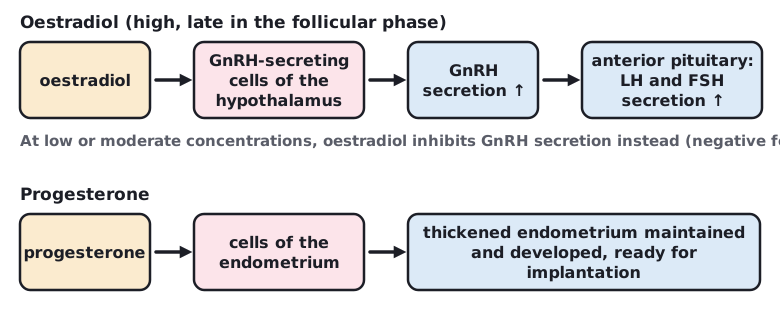
OestradiolCells in the hypothalamus that secrete gonadotropin-releasing hormone (GnRH)Changes how much GnRH these cells secrete. At low or moderate concentrations, oestradiol inhibits GnRH secretion (negative feedback). When oestradiol stays high late in the follicular phase, it increases GnRH secretion (positive feedback). More GnRH raises LH and FSH secretion by the anterior pituitary, giving the LH surge that triggers ovulation.
ProgesteroneCells in the endometrium (uterus lining)Maintains the thickened endometrium and promotes its further development, including glands and blood supply, ready for implantation. When progesterone falls, the endometrium breaks down (menstruation).
Action of a steroid hormone such as progesterone: it diffuses through the plasma membrane, binds an intracellular receptor, the activated hormone–receptor complex enters the nucleus and binds a specific DNA sequence, transcription is promoted, and mRNA is translated into new proteins. (opens full size in a new tab)
A steroid hormone binds an intracellular receptor, which then binds DNA and promotes transcription.
Flow charts of two steroid hormone targets: high oestradiol late in the follicular phase acts on GnRH-secreting cells of the hypothalamus, increasing GnRH secretion and so LH and FSH secretion by the anterior pituitary; progesterone acts on cells of the endometrium, maintaining the thickened endometrium ready for implantation. (opens full size in a new tab)
Oestradiol acts on GnRH-secreting cells of the hypothalamus; progesterone acts on cells of the endometrium.
Exam tip:

For C2.1.13 the guide limits you to two targets: oestradiol on GnRH-secreting hypothalamus cells and progesterone on endometrium cells. Answer about those, not the whole menstrual cycle, which is in D3.1.

Written and checked against the IB Biology HL specification · Updated October 2026

Frequently asked questions

What is the difference between a hormone and a neurotransmitter?

A hormone is secreted into the blood and transported around the body, so it has distant, widespread and longer-lasting effects. A neurotransmitter is released by a neuron and diffuses across a narrow synaptic gap to one postsynaptic cell, so its effect is localized, rapid and brief. Both act by binding to specific receptors.

How does quorum sensing work in Vibrio fischeri?

Each Vibrio fischeri cell releases a signalling chemical. At low population density it diffuses away, but at high density, as in a squid light organ, it builds up and binds to receptors inside the cells. The activated receptors promote transcription of genes for bioluminescence, so the whole population produces light together.

Why can steroid hormones enter cells but insulin cannot?

Steroid hormones are hydrophobic, so they diffuse through the phospholipid bilayer and bind to intracellular receptors in the cytoplasm or nucleus. Insulin is a large hydrophilic protein, so it cannot cross the membrane. It binds to a transmembrane receptor on the outside of the cell, which passes the signal in.

All 4 questions on Chemical signalling