
Non-coding DNA, mRNA processing and alternative splicingSpec D1.2.14, D1.2.15, D1.2.16
In short
Non-coding sequences are DNA that does not code for polypeptides, such as regulators of gene expression, introns, telomeres and genes for rRNA and tRNA. In eukaryotes, introns are removed from pre-mRNA, exons are spliced together, and a 5' cap and 3' polyA tail stabilise it. Alternative splicing joins different exons, giving several polypeptides from one gene.
Non-coding sequences
In eukaryotes most of the DNA does not code for polypeptides. Non-coding sequences include:
- Regulators of gene expression, such as promoters, where proteins bind to control whether a gene is transcribed.
- Introns: sequences within a gene that are transcribed but removed from the mRNA before translation.
- Telomeres: repetitive sequences at the ends of chromosomes that protect the coding DNA from being lost during replication.
- Genes for rRNA and tRNA: these are transcribed, but the RNA is used directly in ribosomes and in carrying amino acids, so it is never translated into a polypeptide.
Post-transcriptional modification
In eukaryotic cells the RNA made by transcription is pre-mRNA. It is modified in the nucleus to form mature mRNA:
- A 5' cap (a modified guanine nucleotide) is added to the 5' end.
- A 3' polyA tail (a long chain of adenine nucleotides) is added to the 3' end.
- Introns are removed and the exons are spliced together to give a continuous coding sequence.
The cap and tail stabilise the mRNA transcript, protecting it from breakdown in the cytoplasm. Prokaryotes do not do this: their genes generally have no introns and mRNA can be translated while it is still being transcribed.
Alternative splicing
Alternative splicing is the splicing together of different combinations of exons from the same pre-mRNA. Some exons may be left out in one cell type but included in another. This allows one gene to code for different polypeptides, so a genome can produce many more proteins than it has genes.
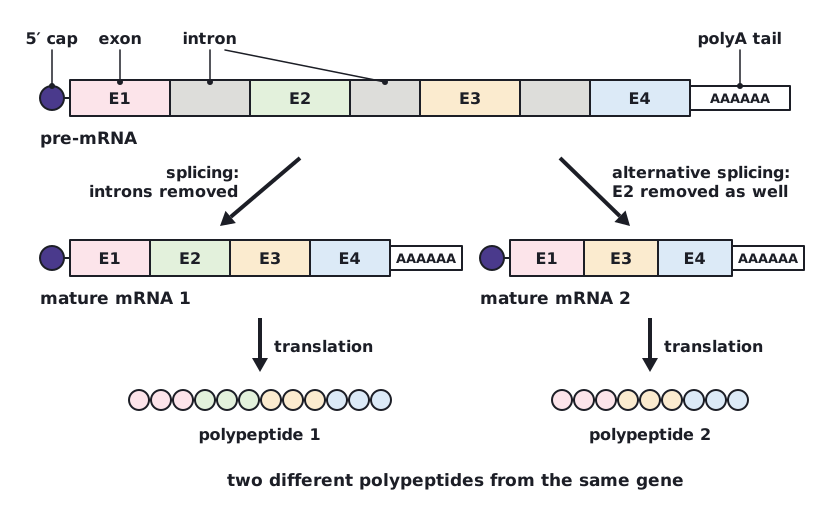 (opens full size in a new tab)
Linking question: how does the diversity of proteins produced contribute to the functioning of a cell? Alternative splicing lets different cells make different variants of a protein from the same gene.
Written and checked against the IB Biology HL specification · Updated October 2026