
Membrane proteins, glycoproteins and the fluid mosaic modelSpec B2.1.4, B2.1.9, B2.1.10
In short
The fluid mosaic model describes a membrane as a fluid phospholipid bilayer with a mosaic of proteins in it. Integral proteins are embedded in one or both lipid layers; peripheral proteins are attached to one surface. Glycoproteins and glycolipids carry carbohydrate chains on the extracellular side, where they work in cell adhesion and cell recognition.
Integral and peripheral proteins
Membrane proteins have diverse structures, locations and functions. Integral proteins are embedded in one or both of the lipid layers. Those that span both layers have hydrophobic regions in contact with the hydrocarbon core and hydrophilic regions facing the water on each side. Peripheral proteins are attached to one or other surface of the bilayer, often bound to an integral protein, and do not enter the hydrophobic core.
- Transport: channels and pumps (integral proteins).
- Receptors: bind signalling chemicals such as hormones or neurotransmitters.
- Enzymes: catalyse reactions at the membrane surface.
- Cell adhesion: bind cells to each other.
- Cell recognition: identify a cell to other cells.
Glycoproteins and glycolipids
Glycoproteins are proteins with carbohydrate chains attached, and glycolipids are lipids with carbohydrate chains attached. In the plasma membrane the carbohydrate is always on the extracellular side, where it forms a sugary coat on the cell surface.
- Cell recognition: the carbohydrate chains act as markers, so other cells, such as cells of the immune system, can recognise a cell as self or non-self.
- Cell adhesion: carbohydrate chains help cells attach to each other to form tissues.
The fluid mosaic model
The membrane is described as fluid because phospholipids and many proteins can move sideways within each layer, and mosaic because proteins are scattered through the bilayer like tiles in a mosaic.
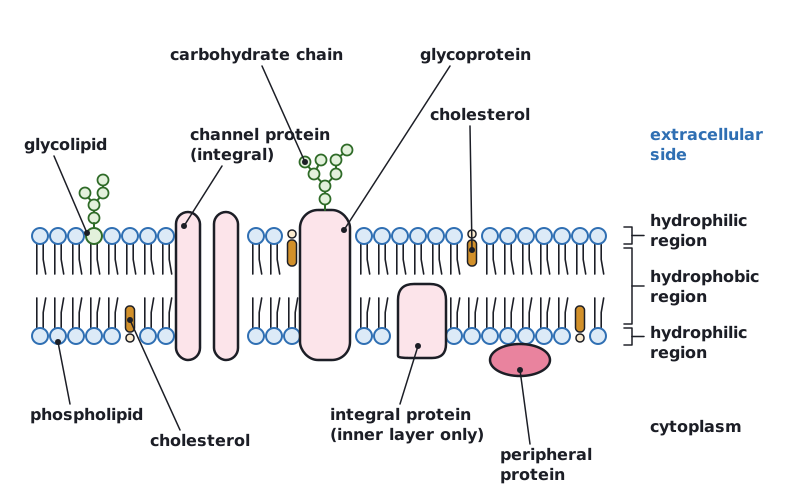 (opens full size in a new tab)
In a drawing, put carbohydrate chains only on the outside, draw cholesterol among the tails, and label the hydrophilic and hydrophobic regions, not just the heads and tails.
Written and checked against the IB Biology HL specification · Updated October 2026