
Preventing polyspermy, the blastocyst and implantationSpec D3.1.15, D3.1.16
In short
Polyspermy, fertilization of an egg by more than one sperm, is prevented by the cortical reaction. The acrosome reaction lets a sperm digest a path through the zona pellucida; when it fuses with the egg, cortical granules release enzymes that change the zona pellucida so other sperm cannot pass. The embryo then forms a blastocyst, which implants in the endometrium.
Mechanisms to prevent polyspermy
An egg with more than one sperm nucleus would have too many chromosomes and could not develop normally. Two reactions ensure only one sperm fertilizes each egg.
- Acrosome reaction: when a sperm reaches the zona pellucida (the glycoprotein layer around the egg), its acrosome releases hydrolytic enzymes that digest a path through it, so the sperm can penetrate the zona pellucida and reach the egg cell membrane.
- The sperm cell membrane fuses with the egg cell membrane.
- Cortical reaction: this fusion causes cortical granules just under the egg membrane to release their contents by exocytosis. Enzymes from them alter the zona pellucida so that it hardens and its sperm-binding sites are destroyed, so other sperm cannot pass through.
Development of a blastocyst and implantation
- The zygote divides repeatedly by mitosis as it is moved along the oviduct towards the uterus.
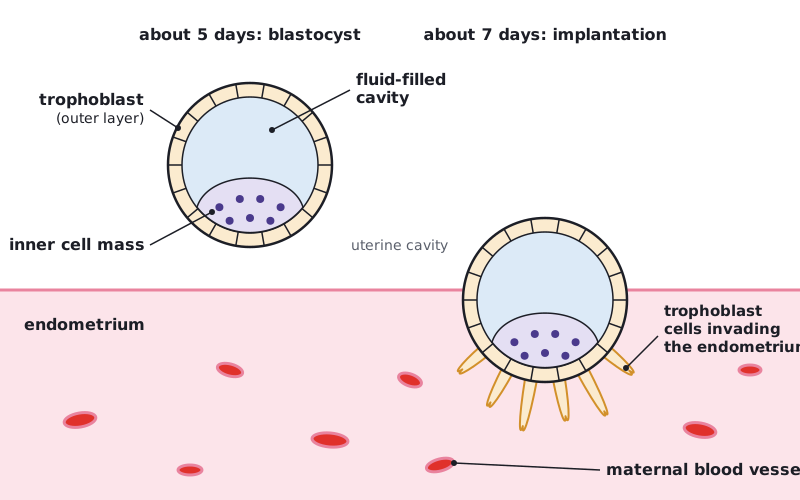
- After about five days it has become a blastocyst: a hollow ball of cells with an outer layer (trophoblast), an inner cell mass that will form the embryo, and a fluid-filled cavity.
- At about day 7 the blastocyst sinks into the thickened endometrium: this is implantation. Trophoblast cells invade the endometrium, giving the embryo nutrients and oxygen and later forming part of the placenta.
 (opens full size in a new tab)
Exam tip:
The names of other embryo stages are not required. Know the blastocyst, its parts and implantation.
Written and checked against the IB Biology HL specification · Updated October 2026