
Biomagnification of pollutantsSpec D4.2.9
In short
Biomagnification is the increase in concentration of a toxin in the tissues of consumers at each higher trophic level. Persistent, fat-soluble pollutants such as DDT and mercury are not broken down or excreted, so they accumulate. Each consumer eats many prey, so top predators carry the highest concentrations and suffer the most harm.
Some pollutants are persistent (not broken down) and fat-soluble, so organisms store them in their tissues instead of excreting them. Their concentration builds up inside each individual over its life (bioaccumulation).
Each consumer eats many prey, taking in all the toxin they stored. So the concentration rises at each trophic level: biomagnification. Consumers in the highest trophic levels have the highest concentrations.
| Pollutant | Source | Effect at high trophic levels |
|---|---|---|
| DDT | Insecticide sprayed on crops and to control malaria mosquitoes | Birds of prey such as ospreys and peregrine falcons laid eggs with thin shells that broke, and populations crashed. Populations recovered after DDT was banned for farm use in many countries. |
| Mercury | Burning coal and gold mining; bacteria in sediments convert it to methylmercury | High levels in large predatory fish such as tuna and swordfish. It damages the nervous system of fish-eating mammals and birds, and of humans. |
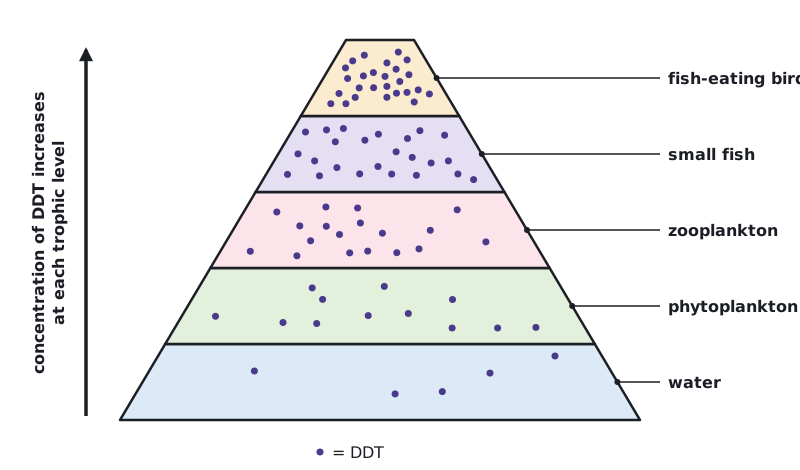 (opens full size in a new tab)
Explain biomagnification with three ideas: persistent, stored in fatty tissue (not excreted), and each consumer eats many organisms from the level below.
Written and checked against the IB Biology HL specification · Updated October 2026