
Structure and diversity of virusesSpec A2.3.1, A2.3.2
In short
Viruses share relatively few features: a small, fixed size, nucleic acid (DNA or RNA) as genetic material, a capsid made of protein, no cytoplasm, and few or no enzymes. Otherwise they are highly diverse: their genetic material may be RNA or DNA, single- or double-stranded, and some are enveloped in host cell membrane while others are not.
Viruses are not cells. Relatively few features are shared by all viruses:
- A small, fixed size: most are about 20–300 nm across, far smaller than bacteria, and they do not grow.
- Nucleic acid as genetic material: either DNA or RNA.
- A capsid made of protein subunits, which protects the nucleic acid.
- No cytoplasm.
- Few or no enzymes, so they depend on a host cell for metabolism.
Diversity of structure
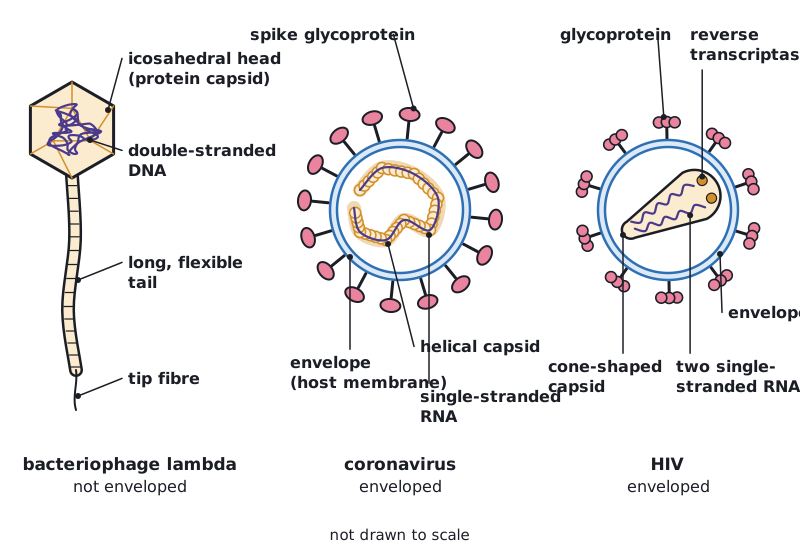
Viruses are highly diverse in shape and structure. Their genetic material may be RNA or DNA, and either can be single- or double-stranded. Some viruses are enveloped in membrane taken from the host cell; others are not enveloped.
| Feature | Bacteriophage lambda | Coronaviruses (e.g. SARS-CoV-2) | HIV |
|---|---|---|---|
| Host | The bacterium Escherichia coli | Mammals and birds; SARS-CoV-2 infects cells lining the human airways | Humans, mainly helper T cells |
| Genetic material | Double-stranded DNA | Single-stranded RNA | Single-stranded RNA (two copies) |
| Capsid | Icosahedral head on a long, flexible tail; the tail tip binds the host | Helical capsid wrapped around the RNA | Cone-shaped capsid |
| Envelope | Not enveloped | Enveloped, with spike glycoproteins that bind host cell receptors | Enveloped, with glycoproteins that bind receptors on helper T cells |
| Enzymes carried | None | None | Reverse transcriptase, integrase and protease |
An envelope is a piece of host plasma membrane picked up as the virus buds out of the host cell, with viral glycoproteins inserted into it.
 (opens full size in a new tab)
Guiding question: how can viruses exist with so few genes? They need no genes for ribosomes, ATP production or most metabolism, because the host cell supplies all of these.
Written and checked against the IB Biology HL specification · Updated October 2026