
Poleward and upslope range shiftsSpec D4.3.6
In short
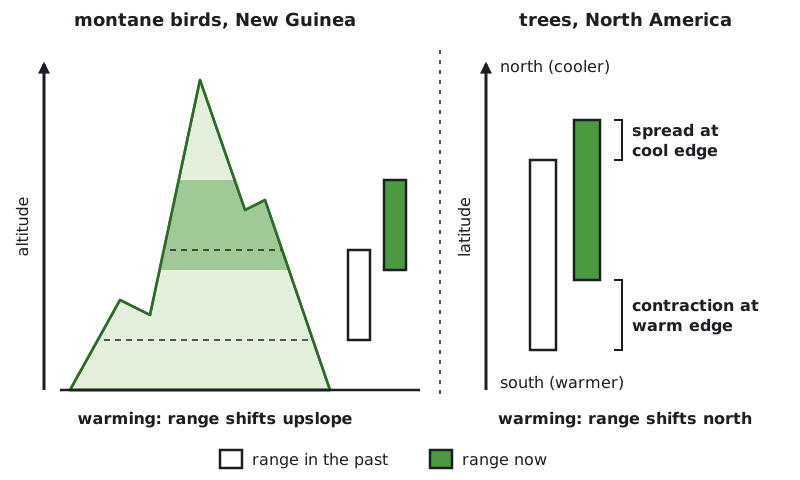
Poleward and upslope range shifts happen when warming makes the edges of a species' range too hot, while cooler areas become suitable. Tropical-zone montane bird species in New Guinea have shifted their ranges upslope. Some North American tree species show range contraction at their warm edge and northward spread at their cool edge.
Each species can only live within a range of temperatures. As the climate warms, the warm edge of a range becomes too hot and areas beyond the cool edge become suitable. So species ranges shift towards the poles and upslope, to higher altitudes.
| Example | Evidence |
|---|---|
| Tropical-zone montane birds in New Guinea | Surveys repeated on the same mountain slopes decades apart found that many bird species now live higher up than before, with their upper and lower limits moved upslope. |
| North American tree species | Surveys of forest plots show some species with range contraction at their southern, warmer edge and northward spread at their cooler edge. Trees disperse slowly, so many ranges are shrinking faster than they spread. |
Species on mountain tops and near the poles have nowhere further to move, so they are at particular risk of extinction.
 (opens full size in a new tab)
Written and checked against the IB Biology HL specification · Updated October 2026