
Cohesion and adhesionSpec A1.1.3, A1.1.4
In short
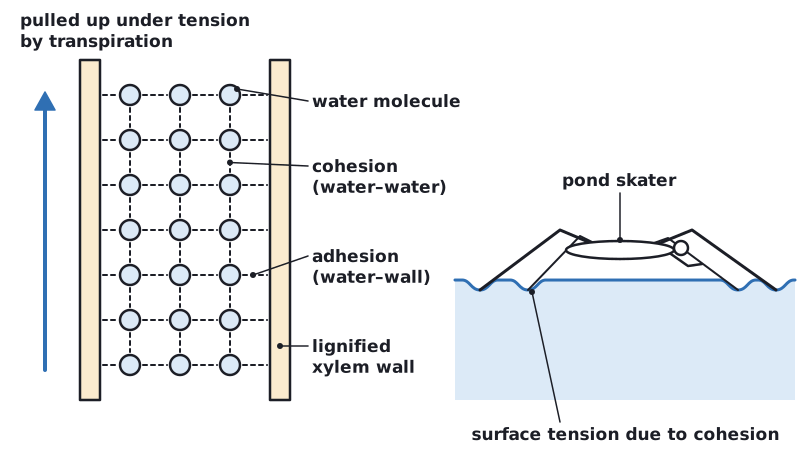
Cohesion is the attraction of water molecules to each other by hydrogen bonds, while adhesion is the attraction of water to other polar or charged materials. Cohesion lets water be pulled up xylem under tension without the column breaking and creates surface tension used as a habitat. Adhesion causes capillary action in soil and in plant cell walls.
- Cohesion
- The attraction of water molecules to each other, due to hydrogen bonding.
- Adhesion
- The attraction of water molecules to materials that are polar or charged, by hydrogen bonds or attraction to charges.
- Surface tension
- The effect at a water surface where cohesion between the surface molecules makes the surface resist being broken.
- Capillary action
- Movement of water through narrow spaces, against gravity, caused by adhesion to the walls together with cohesion.
Consequences of cohesion for organisms
- Transport under tension in xylem. Water evaporates from leaf cells in transpiration, which pulls on the water in the xylem. Because of cohesion, the column of water in each vessel is pulled up as a continuous unit. The water is under tension (negative pressure), yet the column does not break.
- Water surfaces as habitats. Cohesion between molecules at the surface gives surface tension. Small, light animals such as pond skaters (water striders) can stand on the surface film without sinking, and some insect larvae hang from it to breathe.
Consequences of adhesion for organisms
- Capillary action in soil. Water adheres to the charged and polar surfaces of soil particles. It is drawn into the narrow pores between particles and can rise upwards from wetter layers, keeping water available to roots.
- Capillary action in plant cell walls. Cellulose is hydrophilic, so water adheres to the cellulose fibres and is drawn through the narrow spaces in cell walls. In leaves this replaces water that evaporates from the walls of mesophyll cells, keeping them moist for gas exchange.
- Adhesion to the walls of xylem vessels also helps hold the water column in place.
 (opens full size in a new tab)
Exam tip:
Keep the two words apart: cohesion is water to water, adhesion is water to another substance. In xylem answers, credit usually needs both cohesion and tension.
Written and checked against the IB Biology HL specification · Updated October 2026