
Root pressure and phloem transportSpec B3.2.17, B3.2.18
In short
Root pressure is a positive pressure potential in the xylem, generated when roots actively transport mineral ions into the xylem so that water follows by osmosis. It moves water when transpiration is insufficient. Phloem sieve tubes have sieve plates, little cytoplasm and no nucleus, and companion cells with many mitochondria load sugars through plasmodesmata.
Root pressure
- Root cells use ATP to actively transport mineral ions into the xylem vessels.
- The solute concentration in the xylem rises, so water enters the xylem from surrounding cells by osmosis.
- This generates a positive pressure potential (root pressure) that pushes water up the xylem.
Root pressure matters when transport by transpiration is insufficient: for example when high humidity prevents transpiration, or in spring before the leaves of deciduous plants have opened.
Phloem: sieve tubes and companion cells
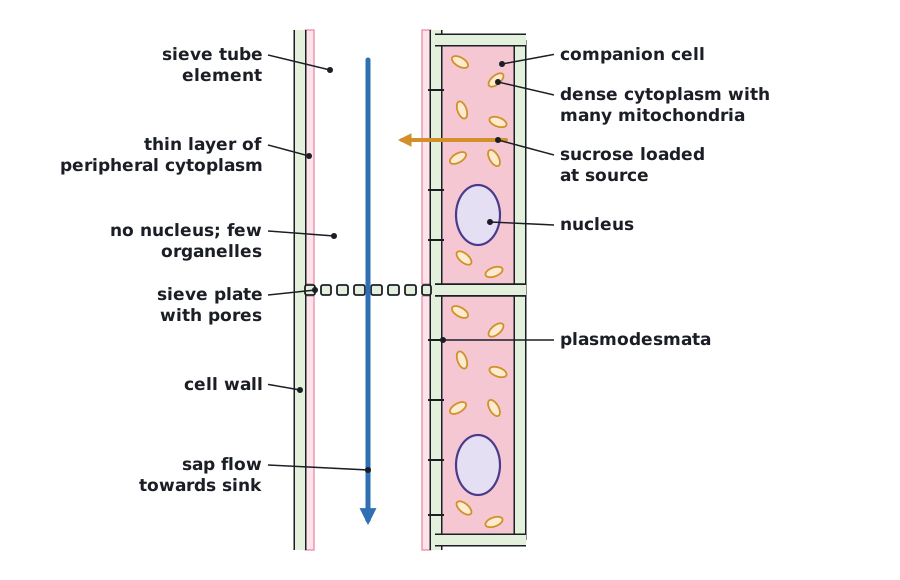
Phloem carries sap containing sucrose and other carbon compounds from sources (for example photosynthesising leaves) to sinks (for example roots, fruits and growing tissues). This is translocation.
| Feature | How it helps translocation |
|---|---|
| Sieve tube elements joined end to end | Form a continuous sieve tube for sap flow. |
| Sieve plates (perforated end walls) | Let sap flow from one element to the next. |
| Reduced cytoplasm and organelles, no nucleus in sieve tube elements | Less resistance, so sap flows more easily. |
| Companion cells with many mitochondria | Produce ATP for active transport to load sugars into sieve tubes at sources. |
| Plasmodesmata between companion cells and sieve tube elements | Connect their cytoplasm, so the companion cell can keep the sieve tube element alive and pass loaded sugars into it. |
Loading carbon compounds at the source raises the solute concentration, so water enters by osmosis and pressure rises. Unloading at the sink lowers it. Sap flows from high to low pressure.
 (opens full size in a new tab)
Quick check
What are fenestrations in capillaries?
Show answer
Pores in the capillary wall that allow particularly rapid exchange, for example in the kidney glomerulus.
How do elastic fibres in artery walls help maintain blood pressure?
Show answer
They stretch when blood is pumped in and recoil between beats, pushing blood on and keeping the pressure up.
What causes tension in the xylem?
Show answer
Loss of water by transpiration from leaf cell walls draws water out of the xylem by capillary action.
Where is xylem found in a dicotyledonous root?
Show answer
In the centre, in a star or X shape, with phloem between its arms.
HL only Which node initiates each heartbeat?
Show answer
The sinoatrial node (the pacemaker) in the wall of the right atrium.
Written and checked against the IB Biology HL specification · Updated October 2026