
The Calvin cycle: carbon fixation, triose phosphate and RuBPSpec C1.3.15, C1.3.16, C1.3.17
In short
In the Calvin cycle in the stroma, the enzyme Rubisco fixes carbon dioxide by combining it with RuBP, forming glycerate 3-phosphate (GP). GP is converted to triose phosphate (TP) using reduced NADP and ATP. Five molecules of TP are converted to three molecules of RuBP using ATP, so the cycle continues; to make glucose, five-sixths of TP is recycled.
Carbon fixation by Rubisco
In the stroma, the enzyme Rubisco catalyses the combination of carbon dioxide with RuBP (ribulose bisphosphate, 5C). The product splits immediately into two molecules of glycerate 3-phosphate (GP), a 3C compound. This is carbon fixation: inorganic carbon becomes part of an organic molecule.
Rubisco is the most abundant enzyme on Earth. High concentrations of it are needed in the stroma because it works relatively slowly and is not effective in low carbon dioxide concentrations.
Synthesis of triose phosphate
Glycerate 3-phosphate is converted into triose phosphate (TP) using reduced NADP and ATP from the light-dependent reactions. Reduced NADP supplies the hydrogen (GP is reduced) and ATP supplies energy.
Regeneration of RuBP
Most triose phosphate is used to regenerate RuBP, using more ATP. You do not need the individual reactions, but five molecules of triose phosphate are converted to three molecules of RuBP (5 × 3C = 15C = 3 × 5C), allowing the Calvin cycle to continue.
Why five-sixths of the triose phosphate is recycled
Show that if glucose is the product, five-sixths of the triose phosphate must be converted back to RuBP.
- One glucose (6C) needs six carbon atoms, so 6 CO₂ must be fixed by 6 RuBP.
- 6 RuBP + 6 CO₂ → 12 GP → 12 TP (36 carbon atoms).
- To regenerate the 6 RuBP (30 carbon atoms), 10 TP are needed (10 × 3C = 30C).
- That leaves 2 TP (6C) to make one glucose.
- 10 of 12 TP are recycled: 10 ÷ 12 = 5/6.
Answer: Five-sixths of the TP is used to regenerate RuBP and one-sixth forms glucose.
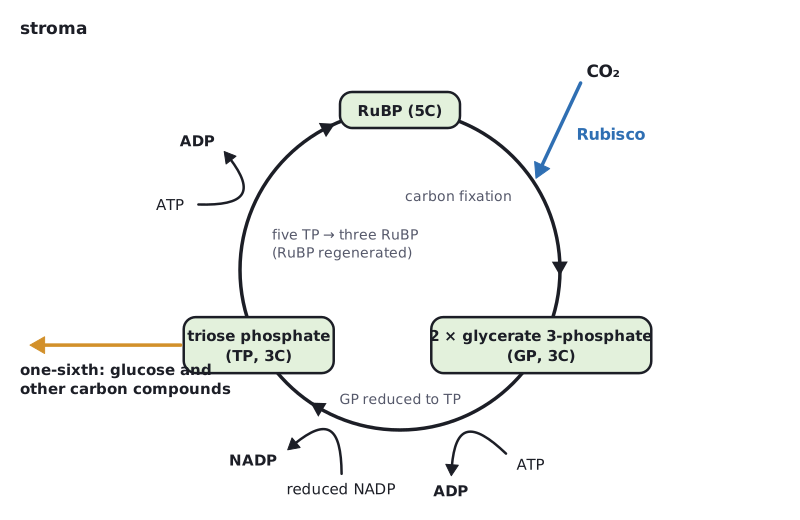 (opens full size in a new tab)
Use the IB names: RuBP, glycerate 3-phosphate (GP) and triose phosphate (TP). The intermediate between RuBP and GP is not required.
Written and checked against the IB Biology HL specification · Updated October 2026