
Loop of Henle and osmoregulation in the collecting ductsSpec D3.3.9, D3.3.10
In short
The loop of Henle actively transports sodium ions out of the ascending limb, maintaining a high osmotic concentration in the medulla so that water can be reabsorbed from the collecting ducts. Osmoreceptors in the hypothalamus control antidiuretic hormone (ADH) secretion by the pituitary; ADH moves aquaporins from intracellular vesicles into collecting duct cell membranes, increasing water reabsorption.
Role of the loop of Henle
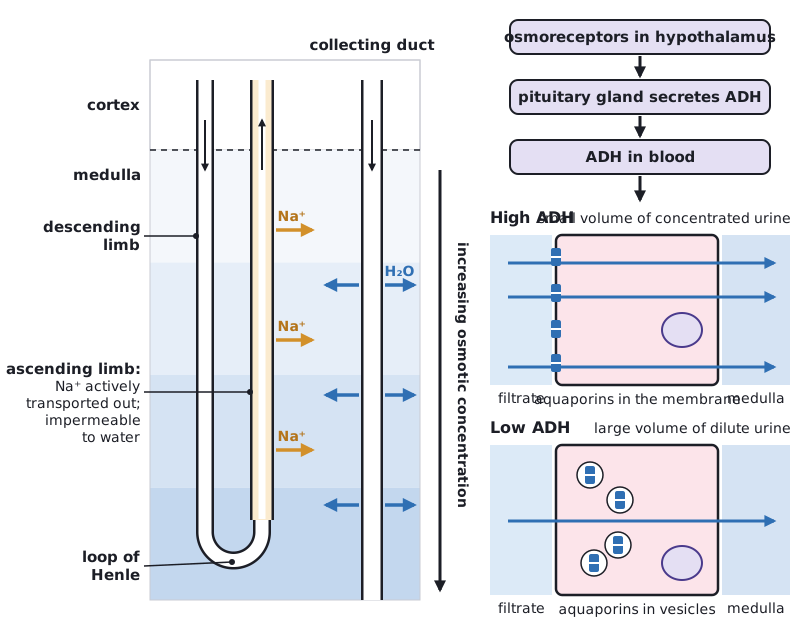
- Cells of the ascending limb use ATP to actively transport sodium ions out of the filtrate into the tissue fluid of the medulla.
- The ascending limb wall is impermeable to water, so water cannot follow the ions.
- This maintains a high osmotic concentration in the medulla. Collecting ducts pass through the medulla, so water can leave them by osmosis whenever their walls are permeable.
Osmoregulation by the collecting ducts
- Osmoreceptors in the hypothalamus detect the osmotic concentration of the blood.
- If the blood is too concentrated (for example after sweating or not drinking), the pituitary gland increases its secretion of antidiuretic hormone (ADH).
- ADH travels in the blood to the collecting duct cells. It causes intracellular vesicles containing aquaporins (water channels) to fuse with the cell membranes facing the filtrate.
- With more aquaporins, more water moves by osmosis out of the collecting ducts into the concentrated medulla and back into the blood. A small volume of concentrated urine is produced.
- If the blood is too dilute, ADH secretion decreases. Aquaporins are taken back from the membrane into intracellular vesicles, so less water is reabsorbed and a large volume of dilute urine is produced.
- Either way, the blood osmotic concentration returns to its set point: negative feedback.
 (opens full size in a new tab)
Exam tip:
Say that ADH changes the location of aquaporins, between intracellular vesicles and the cell membrane. It does not make the duct 'absorb' water actively; water always moves by osmosis.
Written and checked against the IB Biology HL specification · Updated October 2026