
Structure of a nucleosomeSpec A1.2.13
In short
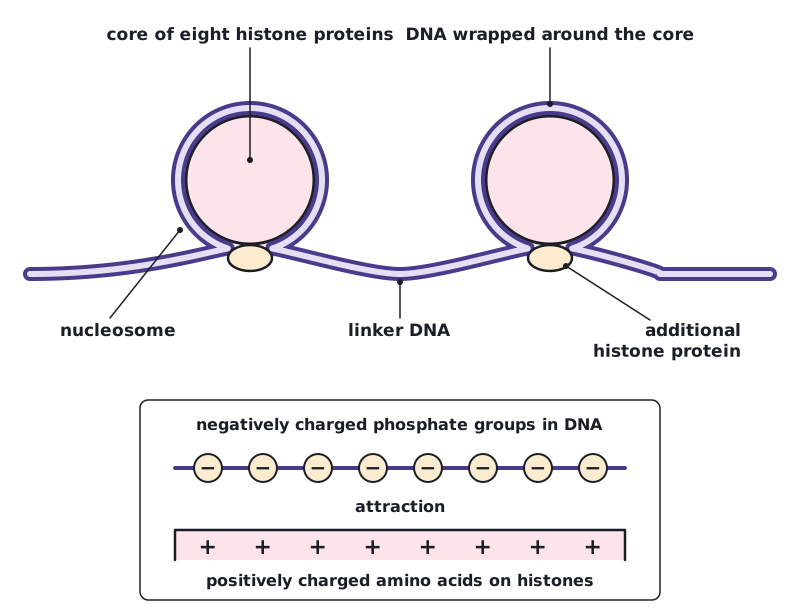
A nucleosome is a DNA molecule wrapped around a core of eight histone proteins, held together by an additional histone protein attached to linker DNA. Nucleosomes package the long DNA molecules of eukaryotic chromosomes. Positively charged amino acids on the histones attract the negatively charged phosphate groups of DNA, which binds the DNA tightly to the protein core.
In eukaryotes, DNA in the nucleus is associated with proteins called histones. The basic unit of packaging is the nucleosome.
- A core of eight histone proteins.
- A length of DNA wrapped around the core.
- An additional histone protein attached to the linker DNA where it enters and leaves, holding the DNA in place.
- Linker DNA continues to the next nucleosome, like beads on a string.
The histones have many positively charged amino acids on their surface. These are attracted to the negatively charged phosphate groups in the DNA backbone, which is why DNA binds so tightly around the histone core.
 (opens full size in a new tab)
Use molecular visualization software (for example JSmol with the nucleosome core particle structure, PDB entry 1AOI) to study how the protein and DNA associate. Colour the histones and DNA separately and look for positive amino acids next to the DNA phosphates.
Written and checked against the IB Biology HL specification · Updated October 2026