
Effect of enzymes on activation energySpec C1.1.10
In short
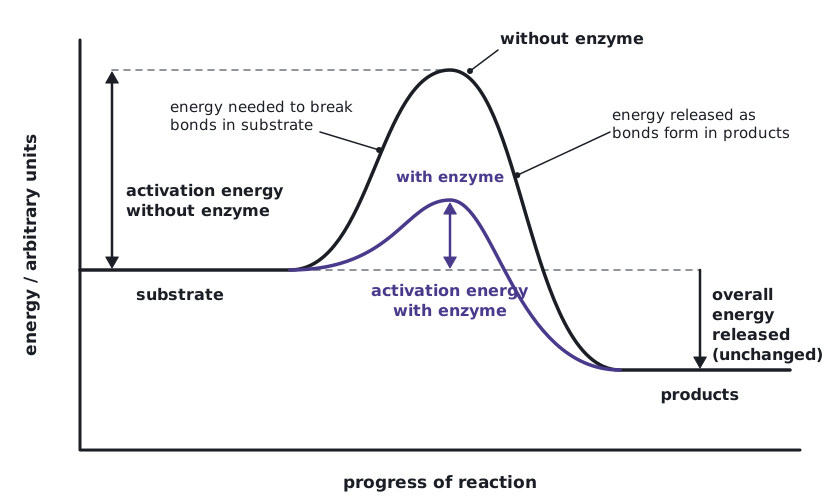
Activation energy is the energy needed to break bonds within the substrate so that a reaction can start. Enzymes lower the activation energy, so more substrate molecules can react at a given temperature and the rate increases. Energy is released when new bonds form in the products. The overall energy change of the reaction stays the same.
Before a reaction can happen, bonds within the substrate must be broken or weakened. This needs an input of energy called the activation energy. When new bonds form to make the products, energy is released (the energy yield). In many metabolic reactions the products have less energy than the substrates, so there is an overall release of energy.
Enzymes lower the activation energy. Binding to the active site stresses and weakens bonds in the substrate, so less energy is needed to reach the transition state. A larger proportion of substrate molecules then have enough energy to react, and the reaction is faster at the same temperature. The enzyme does not change the energy of the substrates or the products, so the overall energy change is unchanged.
 (opens full size in a new tab)
On an energy graph, the activation energy is measured from the substrate level to the peak, not from the products or from zero.
Linking question: enzymes are a clear structure–function relationship in a macromolecule. The folded polypeptide creates an active site that lowers activation energy for one specific reaction.
Written and checked against the IB Biology HL specification · Updated October 2026