
Gene expression and its regulationSpec D2.2.1, D2.2.2, D2.2.3
In short
Gene expression is the mechanism by which information in genes has effects on the phenotype, usually by transcription, translation and the function of a protein product such as an enzyme. Cells regulate it with transcription factors that bind to specific base sequences such as promoters and enhancers, and by controlling how quickly mRNA is broken down by nucleases.
Gene expression is the mechanism by which the information in a gene has an effect on the phenotype. The most common stages are transcription (making mRNA from the gene), translation (making a polypeptide from the mRNA) and the function of the protein product, for example an enzyme that catalyses a reaction producing a pigment.
Regulation of transcription
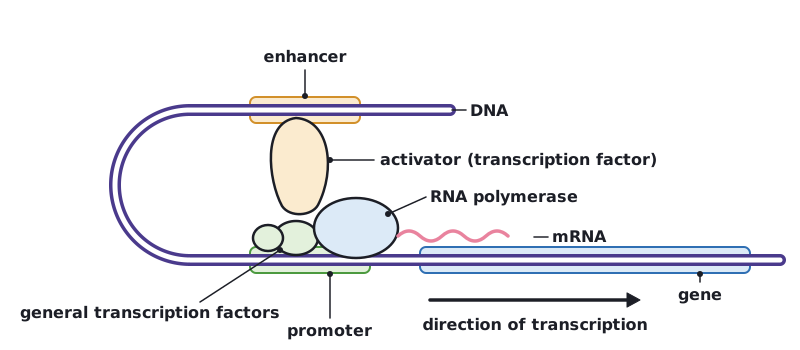
Transcription is regulated by proteins that bind to specific base sequences in DNA. Each binding protein has a shape that fits only one base sequence.
- Promoter
- A base sequence just before (upstream of) a gene where RNA polymerase binds to start transcription.
- Transcription factor
- A protein that binds to a specific base sequence in DNA, such as a promoter or enhancer, and increases or decreases the rate of transcription of a gene.
- Enhancer
- A base sequence, which can be some distance from the gene, where activator transcription factors bind to increase the rate of transcription.
RNA polymerase usually cannot bind to a promoter on its own. General transcription factors must bind to the promoter first. Activator proteins binding to enhancers increase the rate of transcription, while repressor proteins can block it. Different cells contain different transcription factors, so they express different genes.
 (opens full size in a new tab)
Control of mRNA degradation
The amount of protein made also depends on how long each mRNA molecule lasts, because the same mRNA can be translated many times. mRNA is broken down by enzymes called nucleases. In human cells, mRNA may persist for anything from minutes up to days. By changing the rate of breakdown of a particular mRNA, a cell regulates how much translation of that gene happens.
Linking question: what mechanisms are there for inhibition in biological systems? Repressor proteins blocking transcription and nucleases destroying mRNA both inhibit gene expression; compare them with enzyme inhibition (C1.1).
Written and checked against the IB Biology HL specification · Updated October 2026