
Speciation, reproductive isolation and differential selectionSpec A4.1.6, A4.1.7
In short
Speciation is the formation of new species by the splitting of a pre-existing species, the only way new species have appeared. A population is divided by reproductive isolation, such as a geographical barrier, and the parts are then subject to differential selection. Their gene pools diverge, as with bonobos and common chimpanzees separated by the Congo River.
Speciation is the formation of new species by the splitting of a pre-existing species. One population divides into two or more groups that evolve separately until they can no longer interbreed to produce fertile offspring. This is the only way in which new species have appeared.
- Speciation increases the total number of species on Earth. Extinction decreases it.
- Gradual evolutionary change within a single species over time is not speciation, because the number of species does not increase.
How a species splits
- Reproductive isolation: two populations of one species stop interbreeding, so there is no gene flow between them.
- Differential selection: the populations live under different conditions, so natural selection favours different alleles in each.
- Different mutations also arise in each population, and chance changes in allele frequency happen separately.
- Over many generations the gene pools diverge. Eventually the populations could not interbreed and produce fertile offspring even if they met. They are now separate species.
Geographical isolation is one way of achieving reproductive isolation: a physical barrier such as a river, a mountain range or the sea separates the populations.
Bonobos and common chimpanzees
Bonobos (Pan paniscus) and common chimpanzees (Pan troglodytes) are closely related species in the genus Pan. Genetic estimates put the split between the two species at roughly 1 to 2 million years ago. The traditional explanation is that the Congo River formed at about this time and divided the ancestral population. Geological evidence suggests the river is much older, so another hypothesis is that ancestral bonobos crossed to the south bank during a period of unusually low river flow and were then cut off. Either way, the river is the barrier: these apes do not swim, so there is no gene flow across it. Bonobos live only south of the river; common chimpanzees live to the north.
The two populations then faced different selection pressures. One widely discussed explanation is that bonobos, south of the river, had no gorillas competing for ground vegetation, so food was more reliable. This favoured large, tolerant, female-led groups with little aggression. North of the river, chimpanzees share their range with gorillas. This favoured male-dominated groups, more aggression and cooperative hunting.
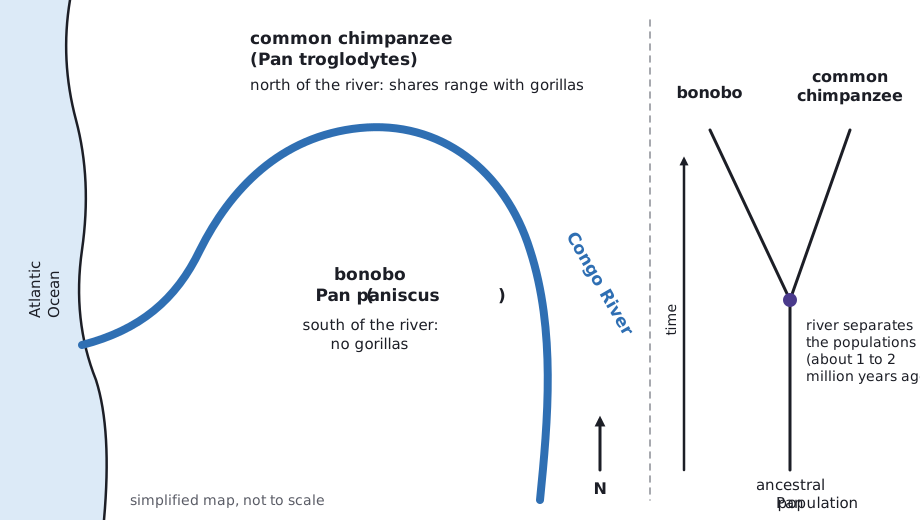 (opens full size in a new tab)
In speciation answers name both stages: reproductive isolation stops gene flow, and differential selection makes the isolated gene pools diverge. Isolation alone does not create a new species.
Written and checked against the IB Biology HL specification · Updated October 2026