
Secondary structure: alpha helices and beta-pleated sheetsSpec B1.2.8
In short
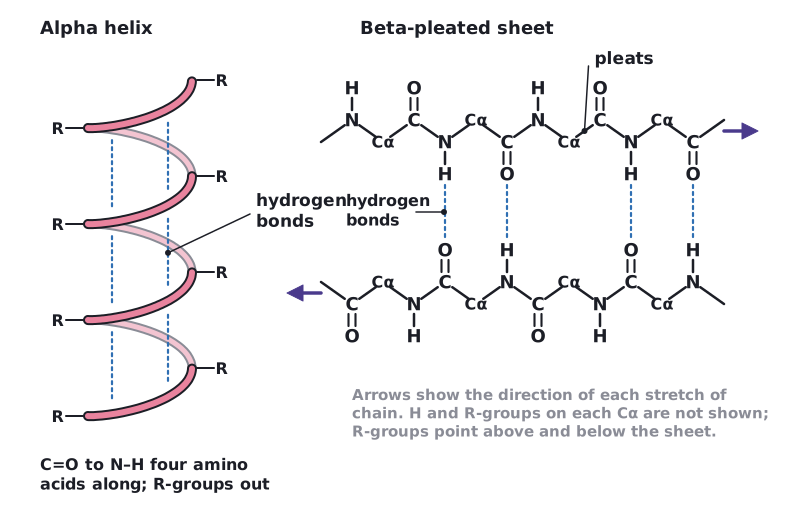
Secondary structure is the regular coiling or pleating of parts of a polypeptide, stabilised by hydrogen bonds in regular positions between the C=O of one peptide bond and the N–H of another. In an alpha helix the chain coils, with each C=O bonded to the N–H four amino acids along; in a beta-pleated sheet, neighbouring stretches lie side by side.
The backbone of a polypeptide contains a repeating –N–C–C– pattern. Each peptide bond has a C=O group, which is slightly negative at the oxygen, and an N–H group, which is slightly positive at the hydrogen. These can form hydrogen bonds with each other.
Because peptide bonds occur at regular intervals, hydrogen bonds form in regular positions, giving two repeating shapes. R-groups are not involved; they point outwards from these structures.
| Feature | Alpha helix | Beta-pleated sheet |
|---|---|---|
| Shape | Chain coils into a spiral | Two or more stretches of chain lie side by side, folded into pleats |
| Hydrogen bonds | Between C=O of one amino acid and N–H of the amino acid four positions further along the same stretch | Between C=O and N–H on neighbouring stretches of chain |
| Orientation of bonds | Roughly parallel to the axis of the helix | Roughly at right angles to the stretches |
 (opens full size in a new tab)
Secondary structure hydrogen bonds are between backbone groups of peptide bonds, not between R-groups. Bonds between R-groups belong to tertiary structure.
Written and checked against the IB Biology HL specification · Updated October 2026