
IB Diploma Biology HL, topic B1
Molecules (Form and function)
This group shows how the structure of a biological molecule suits its function. B1.1 covers carbon compounds, condensation and hydrolysis, carbohydrates and lipids. B1.2 covers amino acids, peptide chains and denaturation, and at HL the four levels of protein structure and the form and function of globular and fibrous proteins.
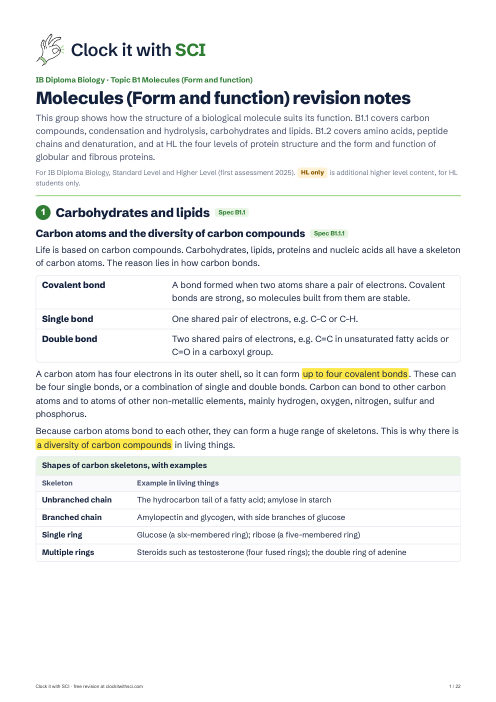 Revision notes
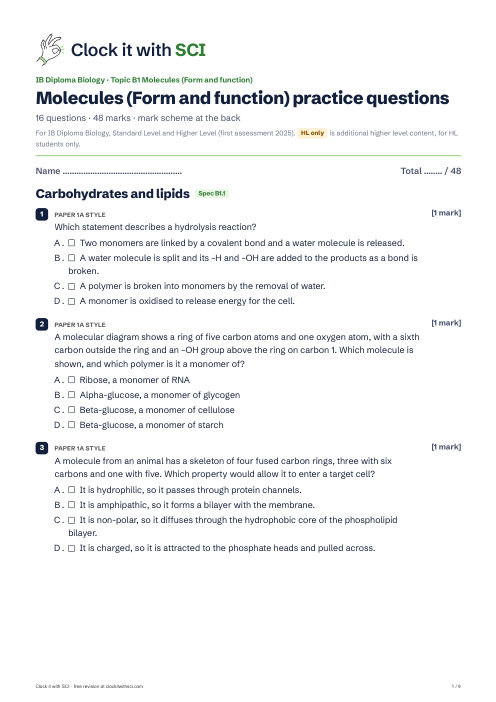 Worksheet
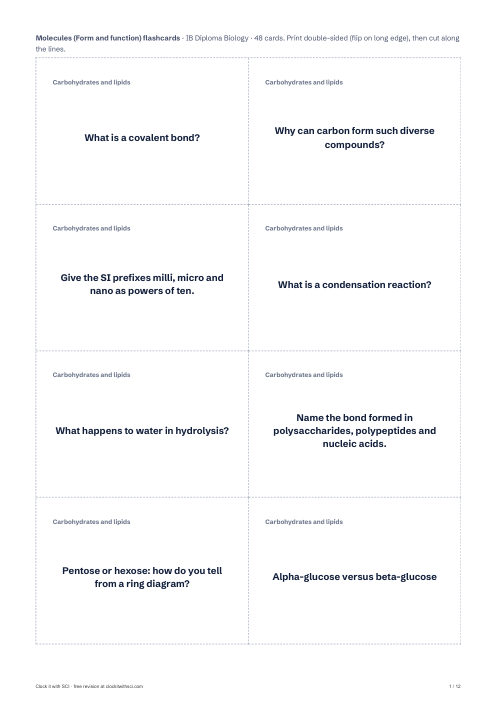 Flashcards
Subtopics
Work through them in order. Each one has notes, exam questions and flashcards, and a PDF of each.
- 1Carbohydrates and lipids Spec B1.1IB Biology B1.1: carbon bonding, condensation, hydrolysis, sugars, starch, glycogen, cellulose, glycoproteins, triglycerides, phospholipids and steroids.NotesQuestions 8Flashcards 24
- Carbon atoms and the diversity of carbon compounds
- Condensation and hydrolysis reactions
- Monosaccharides: form and function
- Starch, glycogen and cellulose
- Glycoproteins and cell–cell recognition
- Lipids: hydrophobic properties, triglycerides and phospholipids
- Fatty acids, energy storage and insulation
- Phospholipid bilayers and steroids
- 2Proteins Spec B1.2IB Biology B1.2: amino acids, peptide bonds, diet, denaturation and, at HL, primary to quaternary structure and globular and fibrous proteins.NotesQuestions 8Flashcards 24
- Amino acids and peptide bonds
- Dietary amino acids and the variety of peptide chains
- Effect of pH and temperature on protein structure
- R-groups and primary structure HL only
- Secondary structure: alpha helices and beta-pleated sheets HL only
- Tertiary structure and the effect of polar and non-polar amino acids HL only
- Quaternary structure: non-conjugated and conjugated proteins HL only
- Form and function in globular and fibrous proteins HL only
Whole topic
When you have done the subtopics: test yourself on everything, or print the lot.