
NAD, oxidation and glycolysisSpec C1.2.7, C1.2.8
In short
Oxidation is loss of electrons, so removing hydrogen with its electron from a substrate (dehydrogenation) oxidises it. NAD accepts the hydrogen and is reduced. Glycolysis, in the cytoplasm, converts glucose to two pyruvate by stepwise reactions: phosphorylation, lysis, oxidation and ATP formation, each catalysed by a different enzyme. Net yield is 2 ATP and 2 reduced NAD.
Oxidation, reduction and NAD
Oxidation is a process of electron loss; reduction is electron gain. When hydrogen (with its electron) is removed from a substrate, a reaction called dehydrogenation, the substrate has been oxidised. Redox reactions involve both: whenever one molecule is oxidised, another is reduced.
NAD (nicotinamide adenine dinucleotide) is the main carrier of hydrogen in cell respiration. It accepts hydrogen removed from substrates and is reduced, forming reduced NAD. Reduced NAD carries the hydrogen (and its energy) to the electron transport chain.
Glycolysis
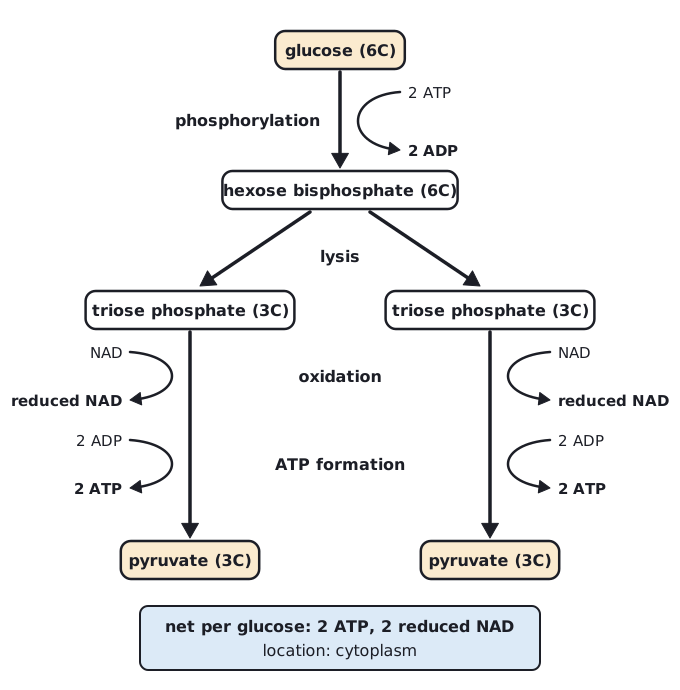
Glycolysis is the conversion of glucose (6C) to two molecules of pyruvate (3C). It takes place in the cytoplasm, does not need oxygen and is a linear pathway in which each step is catalysed by a different enzyme. It has four key stages:
- Phosphorylation: two phosphate groups are added to glucose, using 2 ATP. This makes the sugar less stable and ready to split.
- Lysis: the 6C sugar bisphosphate splits into two 3C triose phosphate molecules.
- Oxidation: hydrogen is removed from each triose phosphate and accepted by NAD, giving 2 reduced NAD per glucose.
- ATP formation: phosphate groups are transferred to ADP, forming 4 ATP per glucose, and two pyruvate are produced.
| Product | Number |
|---|---|
| ATP used | 2 |
| ATP produced | 4 |
| Net ATP | 2 |
| Reduced NAD | 2 |
| Pyruvate | 2 |
 (opens full size in a new tab)
You do not need the names of the intermediates, but you must say that each step is catalysed by a different enzyme and give the net yield: 2 ATP and 2 reduced NAD.
Written and checked against the IB Biology HL specification · Updated October 2026