
Transmembrane and intracellular receptorsSpec C2.1.6, C2.1.7
In short
Transmembrane receptors span the plasma membrane and bind ligands that remain outside the cell, such as proteins and amines. Intracellular receptors are in the cytoplasm or nucleus and bind hydrophobic ligands, such as steroids, that pass through the membrane. Ligand binding to either type sets off a sequence of responses in the cell: a signal transduction pathway.
| Feature | Transmembrane receptor | Intracellular receptor |
|---|---|---|
| Position | Spans the plasma membrane | In the cytoplasm or nucleus |
| Amino acids | Hydrophobic amino acids in the region within the phospholipid bilayer; hydrophilic amino acids in the parts facing the aqueous cytoplasm and extracellular fluid | A soluble protein with hydrophilic amino acids on its surface and no hydrophobic membrane-spanning region; hydrophobic amino acids line the binding site that holds the hydrophobic ligand |
| Ligand | Hydrophilic or large: proteins, peptides, amines, neurotransmitters | Hydrophobic: steroid hormones |
| Does the ligand enter the cell? | No, it binds on the outside and remains outside | Yes, it diffuses through the phospholipid bilayer |
| Typical response | Signal passed in by ion channels, G proteins or enzymes | Activated receptor binds DNA and changes gene expression |
Signal transduction pathways
Binding of the ligand is only the start. It causes a conformational change in the receptor that sets off a signal transduction pathway: a sequence of responses within the cell that converts the outside signal into a change inside.
- The steps can involve ion movement, relay proteins, second messengers (such as cAMP) and enzymes that add phosphate groups to other proteins.
- Each activated molecule can activate many molecules in the next step, so a few ligand molecules can produce a large response (amplification).
- The final response may be a change in membrane potential, in enzyme activity, in the movement of vesicles or in gene expression.
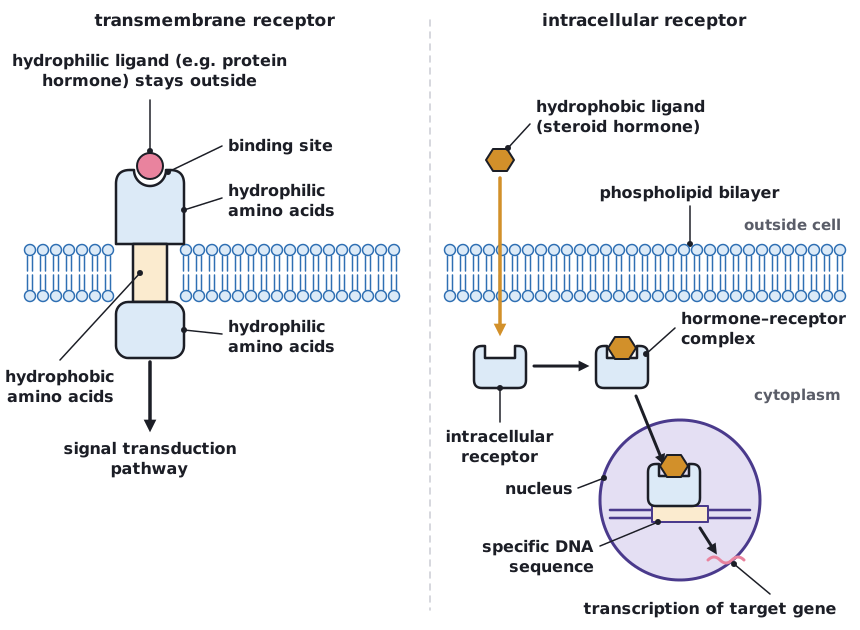 (opens full size in a new tab)
When asked to distinguish the receptor types, give paired contrasts: position, distribution of hydrophilic and hydrophobic amino acids, and whether the ligand enters the cell.
Written and checked against the IB Biology HL specification · Updated October 2026