
B cells and T cells in the immune responseSpec 6.10
In short
B cells produce antibodies: when activated they become plasma cells (B effector cells) that secrete antibody, or B memory cells. T helper cells release cytokines that activate B cells and killer T cells. T killer cells destroy infected cells, and T memory cells give a faster secondary response.
The specific immune response depends on lymphocytes, white blood cells made in the bone marrow. Each lymphocyte has receptors for one antigen. B cells mature in the bone marrow and T cells mature in the thymus.
Sequence of the response to a new pathogen
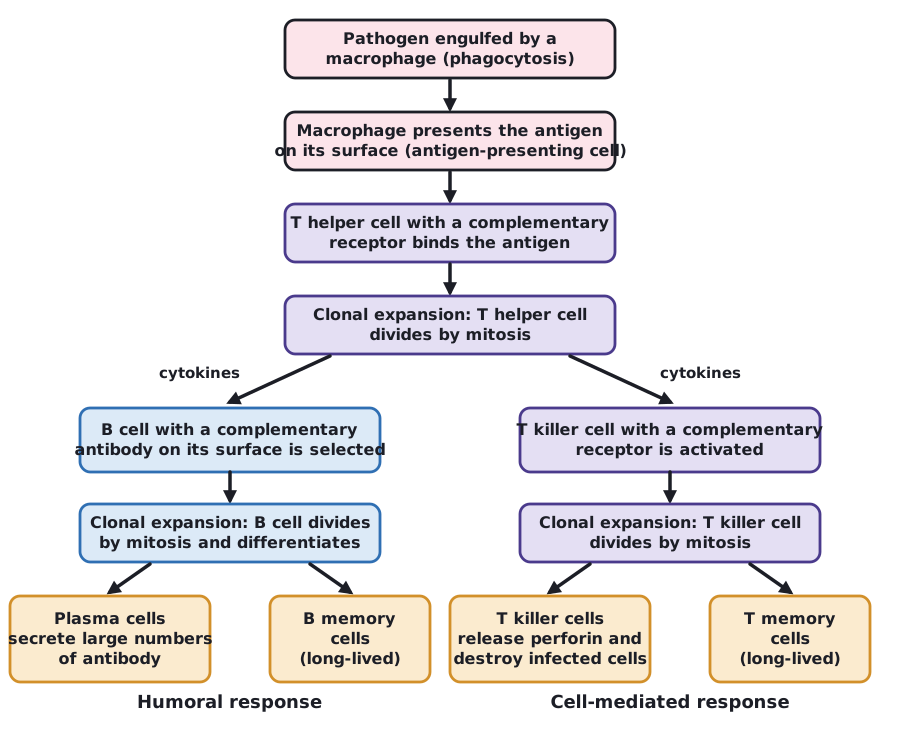
- A macrophage or other antigen-presenting cell engulfs the pathogen and displays its antigens on its surface.
- A T helper cell with a receptor complementary to this antigen binds to the antigen-presenting cell and is activated. It divides by mitosis (clonal expansion) to make a clone of T helper cells.
- T helper cells release cytokines. These stimulate B cells whose antibodies on the surface are complementary to the antigen (clonal selection) to divide by mitosis, and they also activate T killer cells.
- The B cells differentiate into plasma cells (B effector cells), which secrete large quantities of antibody into the blood, and into B memory cells.
- Activated T killer cells find body cells displaying the antigen (for example virus-infected cells) and kill them.
- T and B memory cells remain in the blood after the infection has been cleared.
| Cell | Type | Role |
|---|---|---|
| B cell | B effector (plasma cell) | Makes and secretes antibodies for the humoral response; short-lived |
| B cell | B memory cell | Long-lived; remains in the blood and, on re-exposure to the same antigen, divides rapidly to form plasma cells and more memory cells |
| T cell | T helper cell | Binds antigen presented by APCs and releases cytokines that activate B cells, T killer cells and macrophages |
| T cell | T killer (cytotoxic) cell | Kills infected body cells and cancer cells. Releases perforin to make pores in the target cell membrane and enzymes that cause apoptosis (cell-mediated response) |
| T cell | T memory cell | Long-lived; gives a faster response of killer and helper T cells when the antigen is met again |
The antibody response by B cells is called the humoral response (antibodies are in the body fluids). The response by T cells, which directly kill infected cells, is the cell-mediated response.
Primary and secondary responses
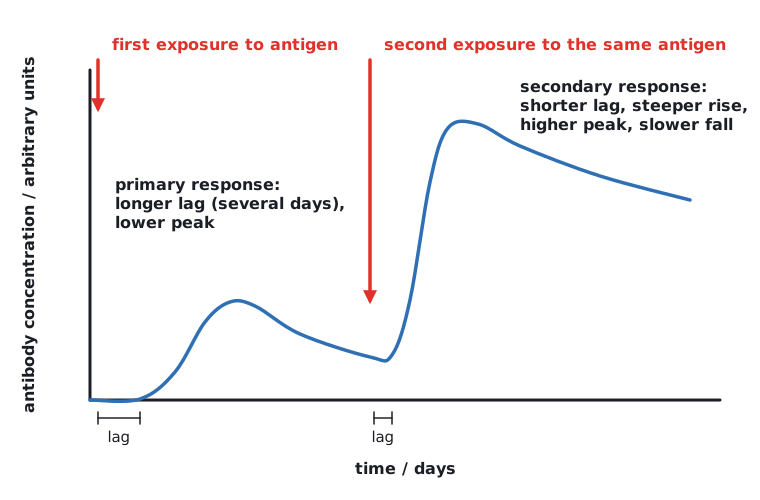
The first time a pathogen is met (the primary response), only a few B and T cells have receptors for its antigens, so it takes several days for enough plasma cells to make antibody, and the person may become ill. On a second exposure (the secondary response), B and T memory cells are activated immediately and divide to produce a large number of plasma cells much faster. Antibody concentration rises faster, reaches a higher level and lasts longer, so the pathogen is destroyed before symptoms appear.
 (opens full size in a new tab)
 (opens full size in a new tab)
Quote the cells in order: antigen-presenting cell, T helper, then B cell and T killer. Questions often lose marks by missing the T helper step.
Written and checked against the Edexcel International A Level Biology (YBI11) specification · Updated October 2026