
Specialised mammalian gametesSpec 3.11
In short
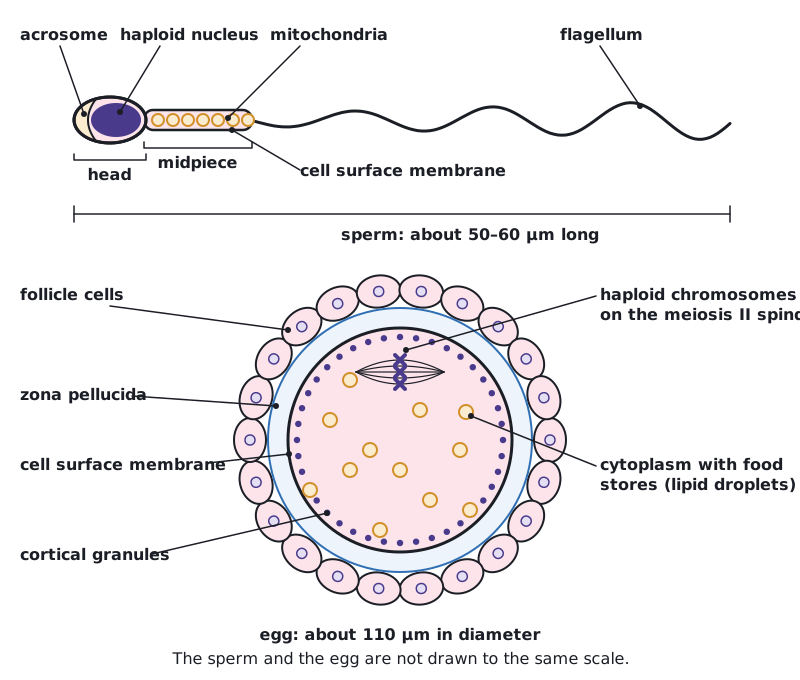
Mammalian gametes are specialised for fertilisation. A sperm has a flagellum for swimming, many mitochondria in the midpiece to make ATP, and an acrosome containing digestive enzymes. An egg cell is large with food stores in its cytoplasm, has a zona pellucida around it, and cortical granules just under its surface membrane.
| Gamete | Feature | Function |
|---|---|---|
| Sperm | Haploid nucleus in the head | Carries the paternal genes |
| Sperm | Acrosome at the front of the head: a modified lysosome containing hydrolytic (digestive) enzymes | Releases enzymes to digest a path through the zona pellucida |
| Sperm | Midpiece with many mitochondria, wound round the base of the flagellum | Produces ATP by aerobic respiration for swimming |
| Sperm | Long flagellum (tail) containing microtubules | Moves the sperm towards the egg |
| Egg cell | Large cell with a haploid nucleus and a lot of cytoplasm, containing food stores | Supplies nutrients to the early embryo until it implants |
| Egg cell | Zona pellucida: a jelly-like layer of glycoproteins outside the cell surface membrane | Contains receptors that bind sperm of the same species; protects the egg; hardens after fertilisation |
| Egg cell | Cortical granules: vesicles just under the cell surface membrane, containing enzymes | Released after fertilisation to prevent other sperm entering (cortical reaction) |
The egg is surrounded by a layer of follicle cells, which the sperm must pass. Both gametes are haploid, so when the nuclei fuse, the diploid number is restored.
 (opens full size in a new tab)
Written and checked against the Edexcel International A Level Biology (YBI11) specification · Updated October 2026